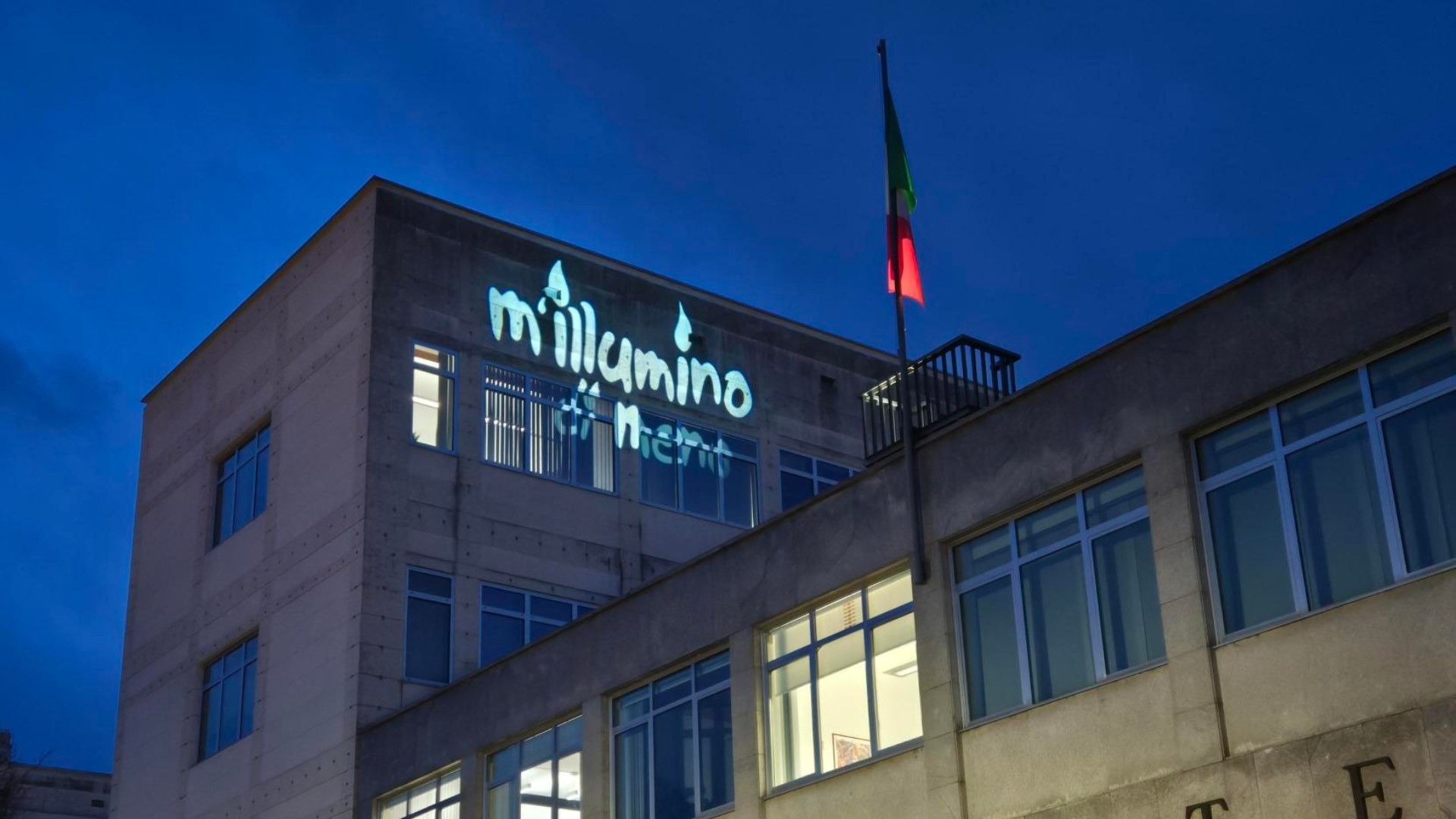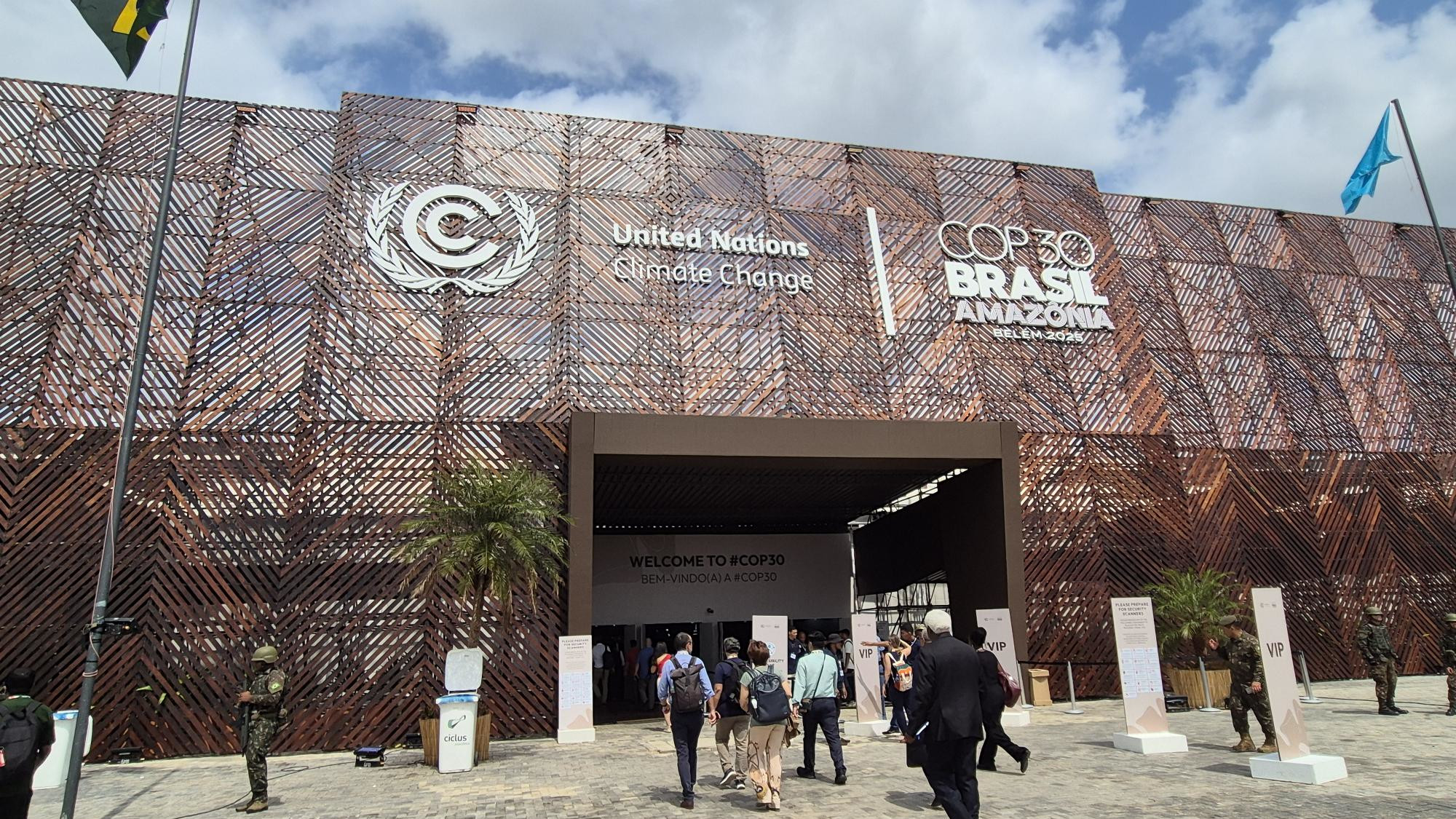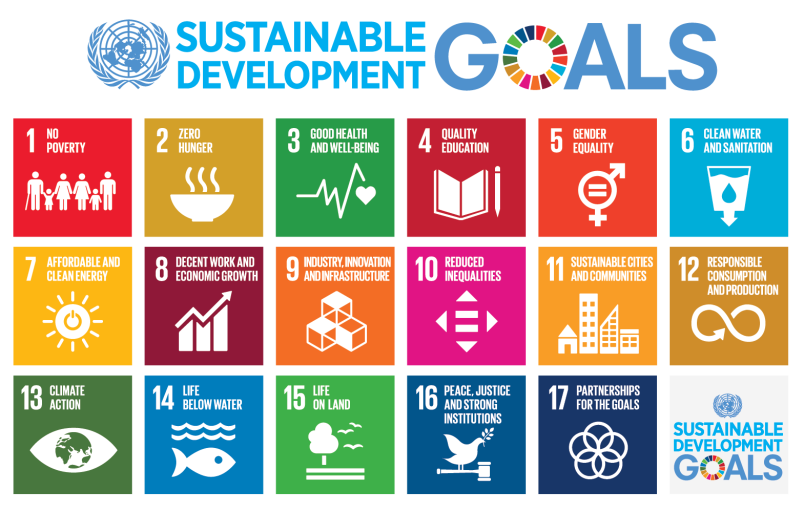
For several years now, Politecnico di Torino has been pursuing a path of integration of sustainability principles in its activities: teaching, research, third mission and campus management. The path undertaken is aimed at developing the principles of sustainability in a shared and systematic strategy, in acknowledgement of the Sustainable Development Goals adopted together with the 2030 Agenda by the United Nations in 2015
The principles of sustainability, the University’s impact on the environment and natural resources, and actions to promote sustainable development of the territory had already been introduced in the Statute of Politecnico di Torino in 2012. Since 2018, in University Strategic Plan specific sections are dedicated to the development of a sustainable campus and to the role of the University in the exchange of knowledge and technologies for sustainable development.
The Politecnico di Torino focuses on developing a new sense of community based on a shared, participatory and sustainable vision and recognises the social role of the University to:
- Direct every action towards improving living conditions, reducing inequalities, building social responsibility towards future generations with reference to sustainable development
- Create and share polytechnic knowledge to support sustainable development at the local, national, and international levels
- Assess potential economic, social, political and environmental impacts
The inclusion of sustainability principles within the University’s Strategic Plan helps to define some concrete sustainability goals in the various areas of the University’s competence:
TEACHING AND RESEARCH
- Innovating the teaching offered to increase the critical sense, social responsibility, problem-solving and problem-solving skills, innovativeness and soft skills of our students
- Include knowledge of the global sustainable development goals of the 2030 Agenda in our curricula
- Recognise the importance of human and social sciences and interdisciplinarity as an educational value
- Direct interdisciplinary research to address the UN 2030 Agenda sustainable development goals
Knowledge Enahancement
- Enhancing our ability to address the UN 2030 Agenda Sustainable Development Goals
The Politecnico also aims to integrate and implement sustainability principles into the management of campus activities (energy, food, waste, water, transport, green procurement, etc.) and into its engagement with the wider community.
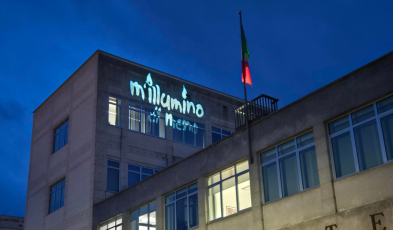
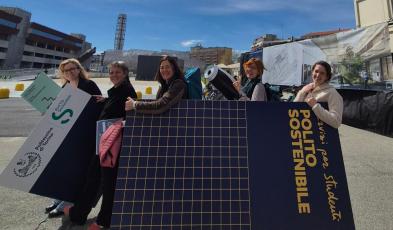
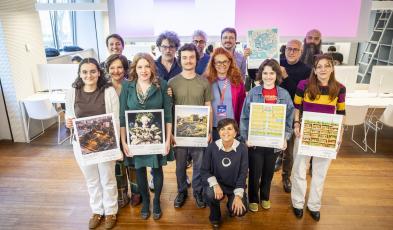
The path towards achieving the ambitious goal of carbon neutrality by 2040 and adapting to climate change represents a major challenge for the University and requires the implementation of immediate and concrete actions in the short term, aimed at reducing environmental and social impact and ensuring the responsible management of resources, in order to build a more sustainable future for the community both within and outside the Politecnico.
“In recent years, as the University Network for Sustainable Development (RUS), we have worked on an emissions reporting protocol for universities, which has proved to be an excellent starting point for building our emissions dashboard. On this basis of information, the University can make informed decisions and develop targeted actions to achieve carbon neutrality and, at the same time, support the challenging path towards climate neutrality for the City of Torino, which is one of the 100 ‘Mission Cities’ in Europe, becoming a hub for experimentation and innovation in the climate sector.”
Patrizia Lombardi, Vice-Rector for Sustainable Campus and Living Lab
“The path we are about to embark upon will have an impact on all the University’s technical and administrative structures, which are called upon to collaborate so that all areas of activity in the coming years converge towards the common goal of decarbonisation.”
Vincenzo Tedesco, Director General
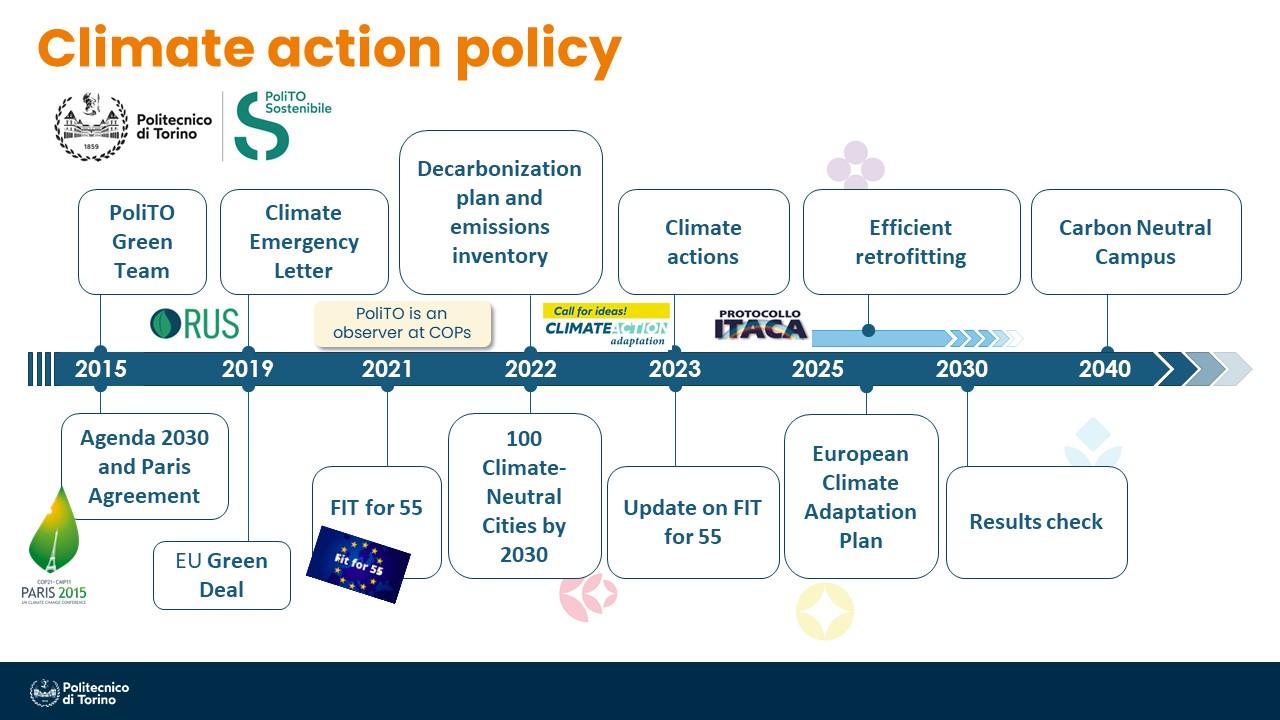
- DECARBONIZATION AND RESILIENCE PLAN
The University’s sustainability journey spans a decade, beginning with the establishment of the Green Team in 2015.
In 2019, the University signed the ‘Race to Zero’ pledge (Climate Emergency Letter) to achieve decarbonisation, subsequently setting 2040 as its target.
The tool adopted to plan, coordinate, implement and monitor the actions already undertaken and those planned by the University to reduce CO2 emissions is the Decarbonisation and Resilience Plan, which is updated annually and sets out the path towards the ‘Net Zero’ and resilience targets by 2040.
- EMISSIONS INVENTORY
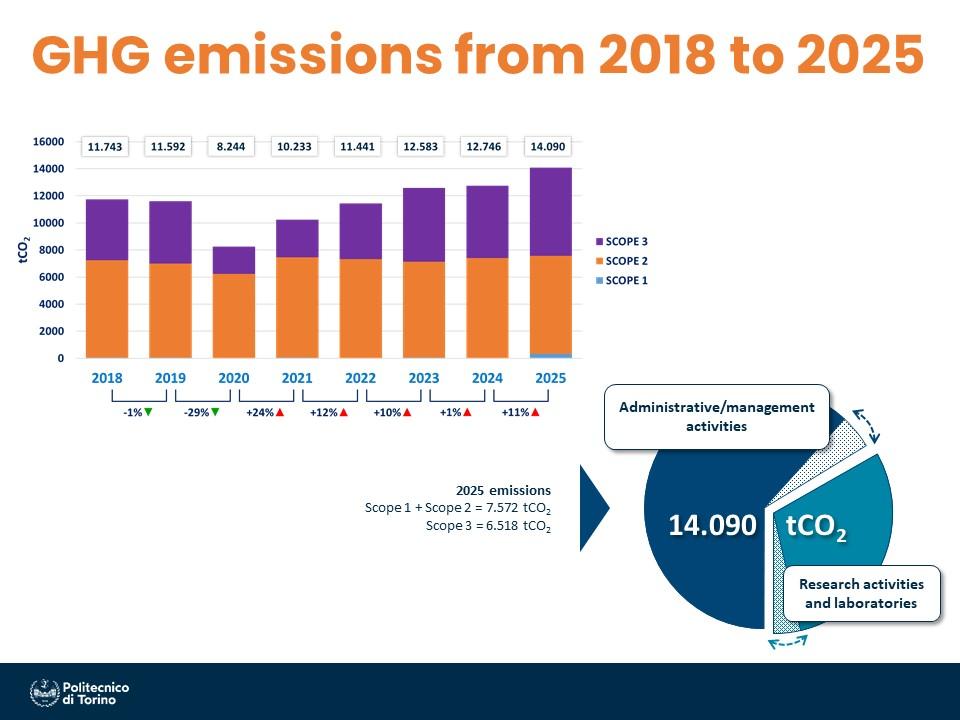
Politecnico di Torino updates its inventory of GHG emissions in accordance with the standards of the “GHG Protocol Corporate Accounting and Reporting Standard (2004)”, analysing the extent of direct emissions (Scope 1), indirect emissions generated by purchased and consumed energy (Scope 2) and all other indirect emissions generated by the University (Scope 3).
Many Green Team working groups and the administration staff are involved in identifying the data required to assess the various sources of emissions according to the adopted approach.
Monitoring of PoliTO’s GHG emissions has been carried out since 2018.
PoliTO follows a sustainable investment policy integrated into its Masterplan, which guides the transformation of the campus through principles of environmental and social sustainability. As highlighted in the 2024–2030 Piano Strategico ‘Polito in transition’, the University’s Masterplan ‘translates the community’s needs into concrete projects, promoting environmental sustainability, a campus open to dialogue with stakeholders, and urban, cultural and economic development’ .
According to the Strategic Plan, “By virtue of its leading role on the national and international stage, and drawing on the experience already gained as a Living Lab, the University intends to:
• accelerate the decarbonization plan, aiming for a further progressive reduction in energy consumption and climate-changing emissions, including by encouraging multimodal approaches to mobility and circular approaches to resource management;
• embrace sustainable development as the driving force behind all the PoliTO’s missions, including education and innovation”
Materials and consumables purchased by the University follow the guidelines of EU Green Public Procurement in a way that respects the environment without forgetting the affordability of procurement. Sustainability policies in this regard cover all purchases, including those of consumables, electronic equipment and beverages, cleaning products, furniture, and more. Purchases thus respond to the guidelines of the ministerial Minimum Environmental Criteria (CAM) and the the network for Green Public Procurement (APE network) promoted by Arpa Piemonte and the Metropolitan City of Torino, which the Politecnico is part of.