


PoliTO for “M’illumino di Meno”
On the occasion of the National Day of Energy Saving and Sustainable Lifestyles, Politecnico renews its commitment to the ecological transition by participating in the 22nd edition of “M’illumino di meno.” The initiative, promoted by the Caterpillar program on Rai Radio2, was launched in 2005 with the aim of spreading a culture of environmental sustainability and resource conservation. In 2022, it reached a significant milestone: the Italian Parliament, through the conversion of Decree Law no. 17/2022, established February 16 as the National Day of Energy Saving and Sustainable Lifestyles, in memory of the first edition of the campaign.
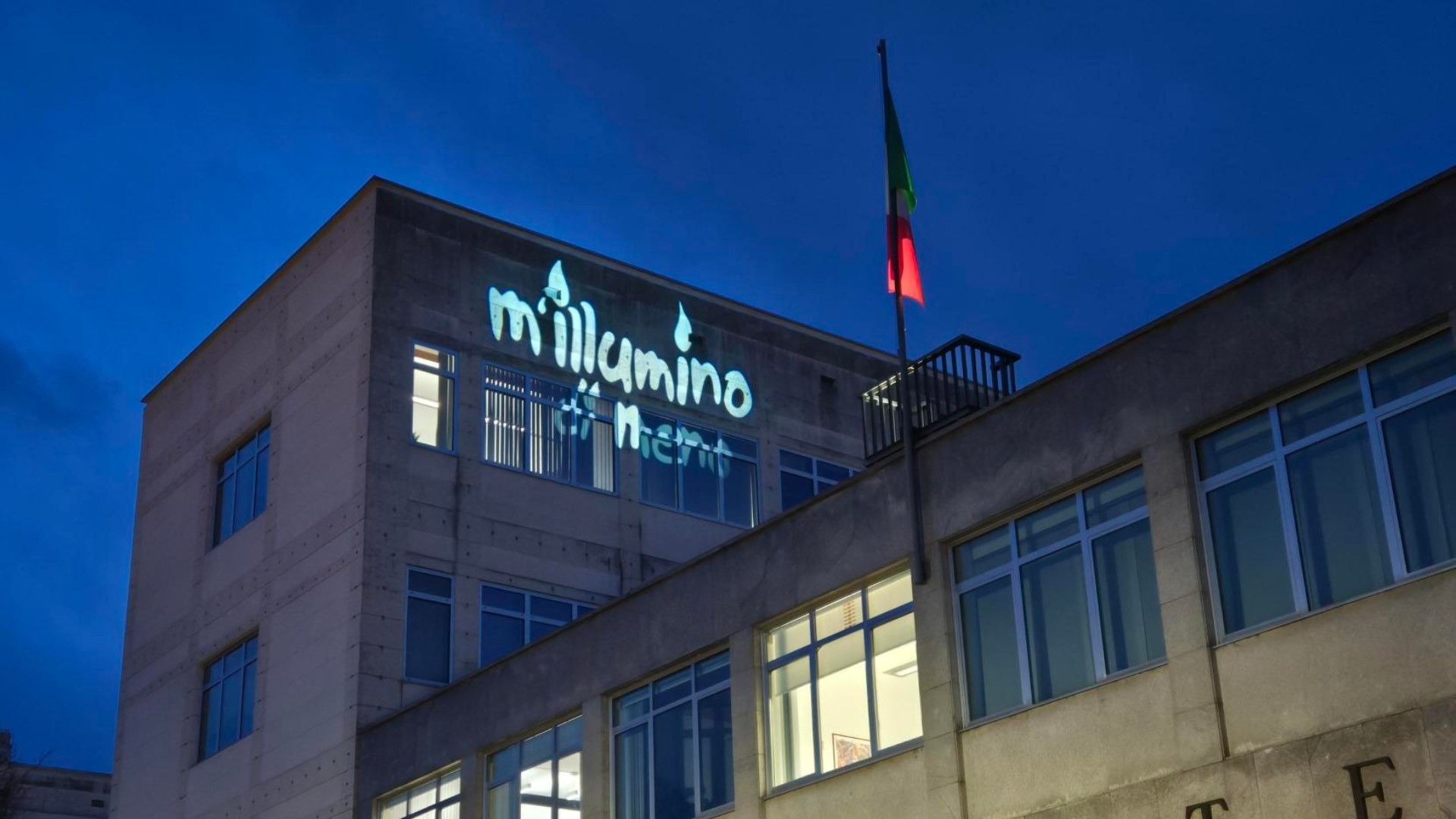
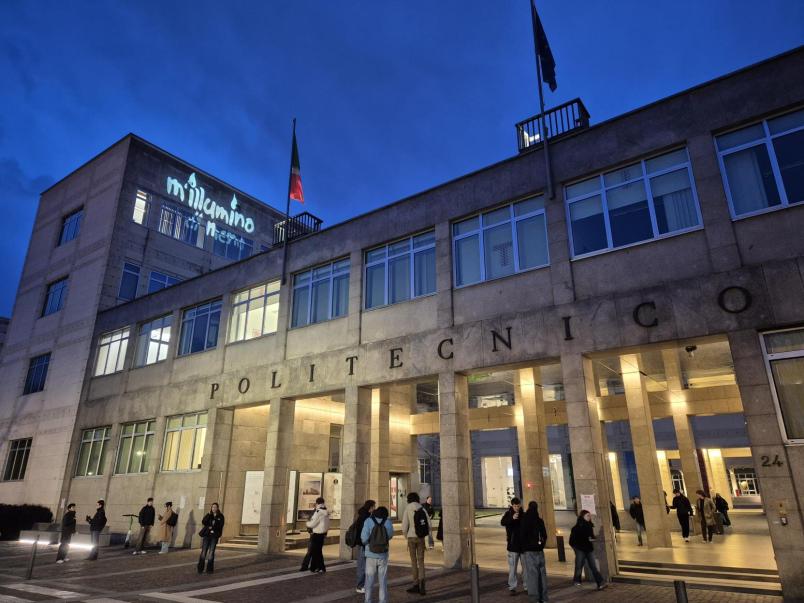
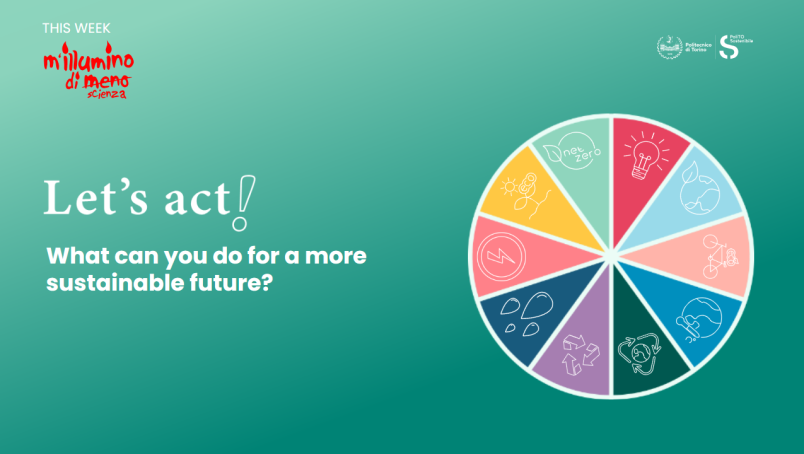
As a symbolic gesture, on Monday, February 16, the Politecnico turned off the lights of the Castello del Valentino, the historic headquarters of the PoliTO, to raise public awareness about the need to reduce environmental impact. During the same week, from February 16 to 20, the message was reinforced through the projection of the initiative’s logo on the main facade on Corso Duca degli Abruzzi and the dissemination, via Politecnico information totems, of concrete and easily adoptable actions for everyday life: turning off lights and closing doors and windows to avoid energy waste; choosing more sustainable modes of transport such as walking, cycling, or using public transport; properly sorting waste; using personal water bottles at PoliTO fountains to reduce single-use plastic; preferring stairs over elevators, with benefits for both the environment and health; and many other small daily actions that, if shared by the entire academic community, can generate a significant impact.
In this direction, a key contribution is provided by the Green Team, a hub of expertise dedicated to implementing the 17 Sustainable Development Goals of the 2030 Agenda within the Politecnico. The Team promotes the structural integration of sustainability into research, teaching, communication, and services through five thematic Working Group - Energy and Climate Change, Sustainable Mobility, Resources, Education and Public Awareness, Inclusion and Equity - supported by cross-cutting actions aimed at strengthening the PoliTO’s third mission.
Participation in “M’illumino di meno” is part of a structured and ongoing pathway. During its years coordinating the Network of Universities for Sustainable Development (RUS), the Politecnico helped disseminate the initiative at the national level, facilitating the Network’s inclusion among the campaign’s official partners. This commitment is reflected in the words of the Vice-Rector for Sustainable Campus and Living Lab, Patrizia Lombardi, who chaired the RUS for six consecutive years (2019-2025) and is now Chair of the Sustainable Development Solutions Network Italy: “Raising awareness about energy saving and the protection of natural resources is an ongoing commitment at the Politecnico of Turin, in line with this year’s theme, which recognizes science as playing a central role in finding solutions to the climate crisis. For years, the PoliTO has been carrying out concrete actions, also through the work of the Green Team, with dedicated plans and constant monitoring. Even a symbolic gesture such as switching off the lighting of our historic headquarters thus becomes a collective signal: an invitation to reflect on the value of more sustainable daily choices and on the shared responsibility in building the future.”
The technical and strategic framework of the actions undertaken by the Politecnico is outlined by professor Enrico Fabrizio, Energy Manager of the Politecnico: “A university campus, in terms of size and functional complexity, can be likened to a small urban district, characterized by high energy intensity (laboratories, ICT, data centers, HVAC systems) and significant variability in loads. Our University has continuously monitored its CO₂ equivalent emissions, integrating energy data into reporting and analysis platforms. To achieve the strategic goal of climate neutrality, a progressive reduction in annual emissions is required through limiting energy demand, increasing efficiency, and expanding self-production from renewable energy sources. An enabling element of the strategy is the monitoring infrastructure, which allows normalized energy analyses, supports retrofit decisions, and enables the implementation of predictive management logics. Politecnico becomes a ‘Living Lab’ for the energy transition: a space where design, monitoring, control, and research are integrated into a continuous cycle of improving energy and environmental performance.”