


Climate crisis, the voice of Politecnico at COP30
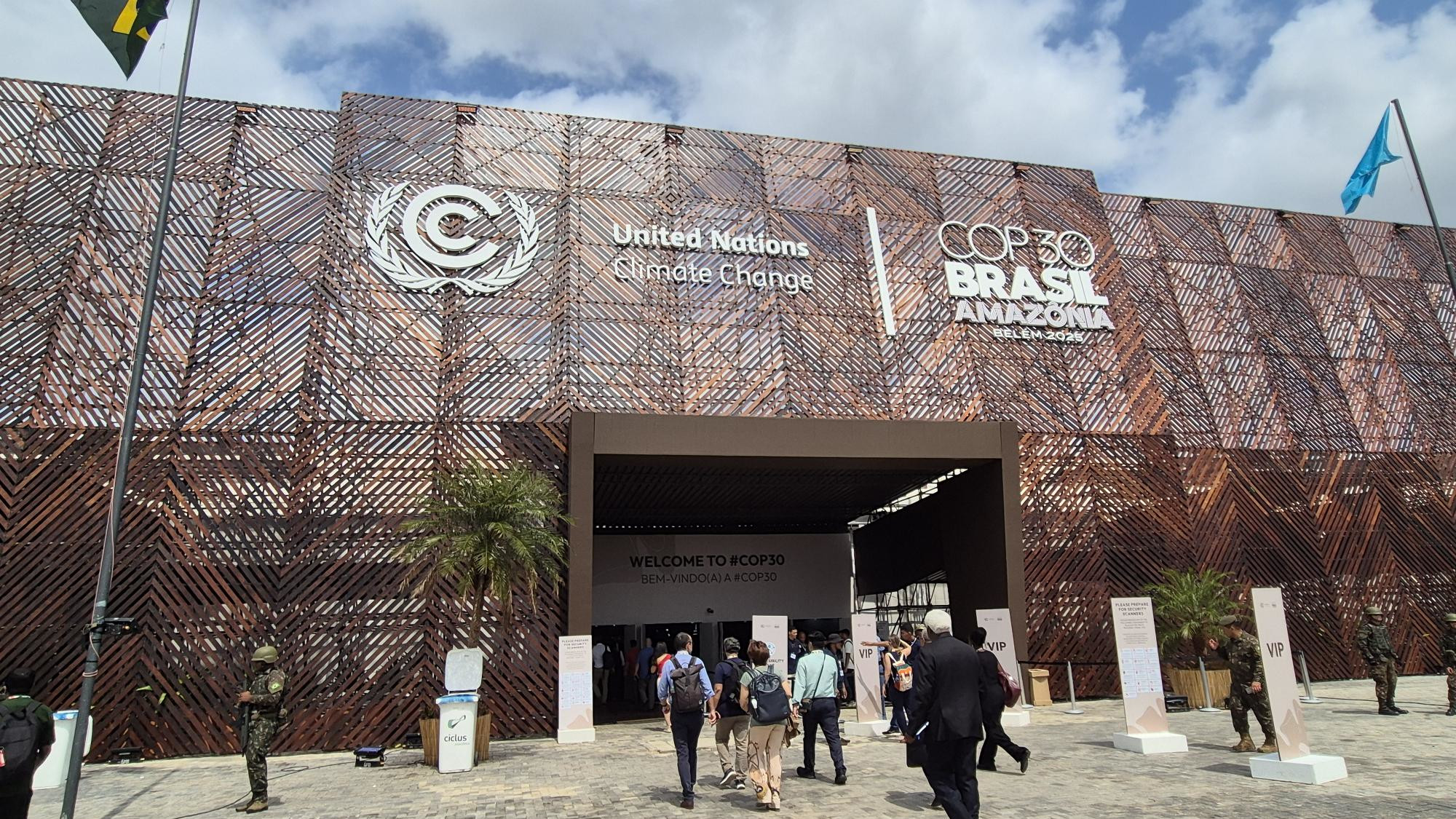
The thirtieth Conference of the Parties, COP30, which was held in the Brazilian state of Pará, in the city of Belém on the edge of the Amazon rainforest, concluded on 22 November.
At a historical moment in which the climate crisis increasingly transcends the boundaries of scientific debate and shapes economic, social and industrial policies, COP30 represented a crucial appointment for keeping multilateral discussion alive and for the possibility of reaching a new agreement among the Parties that in 1992, in Rio de Janeiro, adhered to the United Nations Framework Convention on Climate Change (UNFCCC). Ten years after the Paris Agreement, expectations for COP30 were very high, and although the work carried out between 10 and 22 November did not meet all hopes, some positive elements nonetheless emerged: the reference to the 1.5°C threshold established by the Paris Agreement was confirmed and, within the “Global Goal on Adaptation,” a step forward was taken to strengthen adaptation measures, confirming the intent to triple financing allocated to this area. Crucial issues remain open, however, such as the absence in the final text of an explicit reference to fossil fuel sources and of a detailed roadmap to give concrete substance to the “transitioning away” from fossil fuels agreed in Dubai in 2023.
Yet IPCC reports and the analyses and insights of climate scientists show a clear picture: the global emissions curve is not decreasing at the necessary speed, the impacts of global warming are already evident, and the time window to keep temperature rise within 1.5°C, as required by the Paris Agreement, is shrinking dramatically.
In this scenario, a concrete change of course is needed, based on credible, measurable actions grounded in scientific evidence. Precisely for this reason, the role of research, education and innovation is today more crucial than ever. Politecnico’s participation at COP30, which, since COP26 in Glasgow, has attended as an accredited UNFCCC “observer”, is motivated exactly by this need: to bring expertise, data, tools, evidence and visions capable of contributing to the definition of global climate policies.
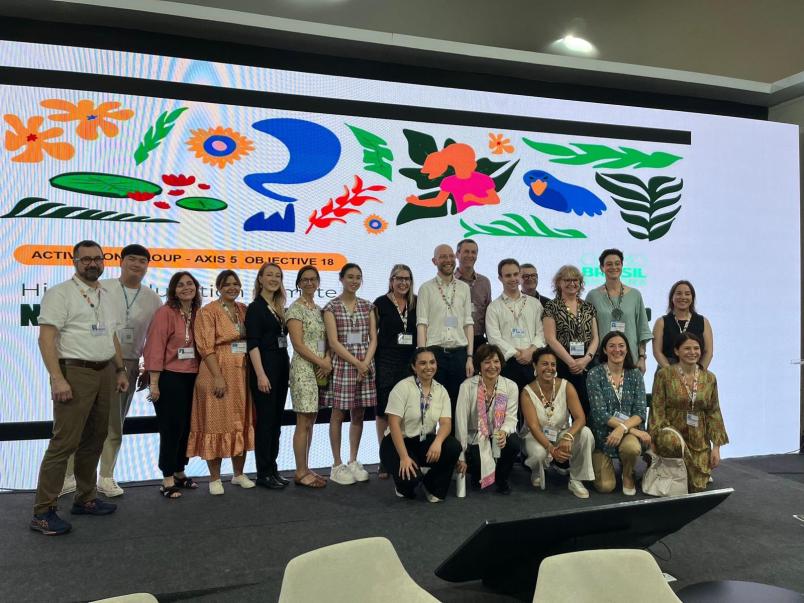
Inside the Blue Zone pavilions at COP30, parallel to the negotiations conducted by government representatives on the topics at the center of the Brazilian Presidency’s agenda, Politecnico, together with other international universities, brought the new Higher Education for Climate Action Pavilion, present for the first time in the history of the COPs and entirely dedicated to the strategic role of universities. The Pavilion’s presence at the COP was made possible thanks to more than five years of networking work, and Politecnico’s contribution was also highlighted by the presence of its logo, a testimony to the strategic value of collaboration among universities in tackling the climate crisis and in strengthening the impact of research and education at the global level.
In this Pavilion, on 13 November the Vice-Rector for Sustainable Campus and Living Lab Patrizia Lombardi chaired the panel Sport, Climate, and Community: Advancing Sustainable Development through Academia, bringing the experience of the Politecnico’s Sporty Campus project and sharing, with other speakers from Italian and foreign universities, reflections on the role of sport as a lever for sustainable territorial development and social innovation, to promote urban resilience and inclusion. In the same Pavilion, on 17 November, Mariachiara Zanetti, Vice-Rector for Territorial, National and European Policies, moderated the event High level formation in climate change performed by higher education institutions: learning by doing, which was also attended by Vincenzo Riggio, a Professor at the Department of Environment, Land and Infrastructure Engineering-DIATI, who highlighted the importance of experiential learning and advanced training pathways to prepare new generations to face the challenges of the climate transition.
Another “side event”, organized on 11 November by the Politecnico together with Università Bocconi in the Conference’s official event spaces, addressed the theme Local climate finance for a just transition to carbon neutral and resilient cities. On that occasion, Vice-Rector Patrizia Lombardi illustrated the University’s significant contribution to the City of Turin’s Climate City Contract, within the framework of the European Commission’s “100 Climate-Neutral and Smart Cities” Mission, which aims to achieve climate neutrality by 2030.
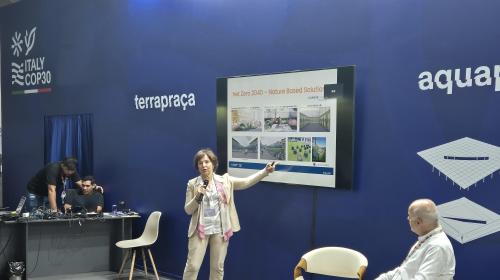
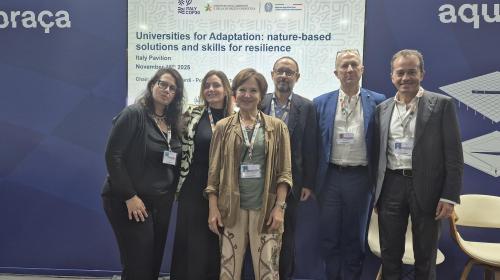
The University also played a leading role in two other events, both on the theme of Nature Based solutions, this time at the Italy Pavilion. In particular, on 12 November Vice-Rector Lombardi intervened in the panel Nature-Based Solutions for Resilient and Carbon Neutral Urban Areas, chaired by Università Bocconi, while on 15 November Politecnico coordinated, together with the Università del Piemonte Orientale, the event of the Rete delle Università per lo Sviluppo Sostenibile (RUS) entitled Universities for Adaptation: nature-based solutions and skills for resilience. Chaired and moderated by Vice-Rector Lombardi in her capacity as RUS delegate for international relations, the event brought the Politecnico’s experience on adaptation actions to climate change.
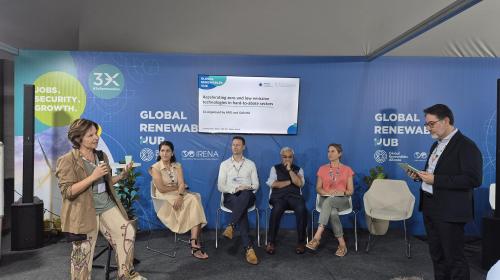
Beyond the scheduled events, Vice-Rector Lombardi was also invited by the Global Alliance for Sustainable Energy, of which the Politecnico is a founding member, to speak at the event Accelerating Zero & Low Emission Technologies in Hard-to-Abate Sectors, held at the Global Renewables Hub Pavilion. In the presence of sector experts, the dialogue focused on the development of decarbonization strategies and on the large-scale deployment of renewable energies, centering on the harmonization of standards for Scope 3 measurement and on the integration of robust ESG principles across energy value chains.
Politecnico’s presence at COP30 confirms the University’s determination to take an active role in the international debate and to contribute scientific and technological expertise to the development of effective solutions against the climate crisis and to policy advocacy on these issues. Research, innovation, education, knowledge valorization, living labs and policy advocacy: these are the tools through which the Politecnico continues to work for a more sustainable, fair and resilient future, placing young people and skills at the center.

- Immagine
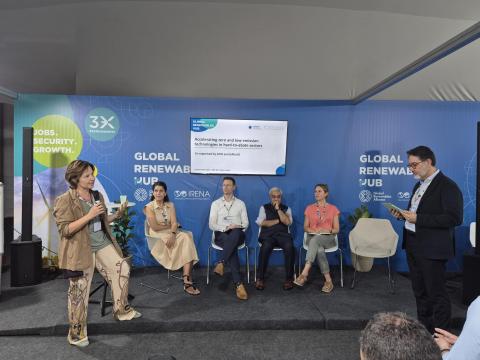 NomeVice-Rector Lombardi's speech at the event organized by the Global Alliance for Sustainable Energy, Padiglione Global Renewables Hub
 - Immagine
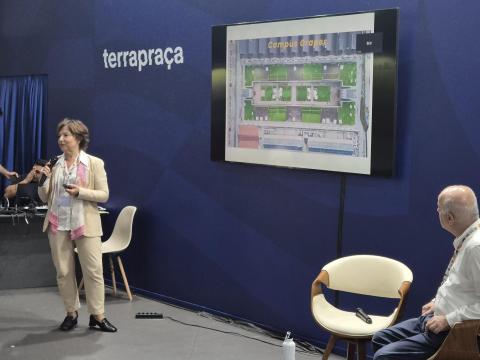 NomeVice-Rector Lombardi's speech at the event “Nature-Based Solutions for Resilient and Carbon Neutral Urban Areas”, Padiglione Italia
 - Immagine
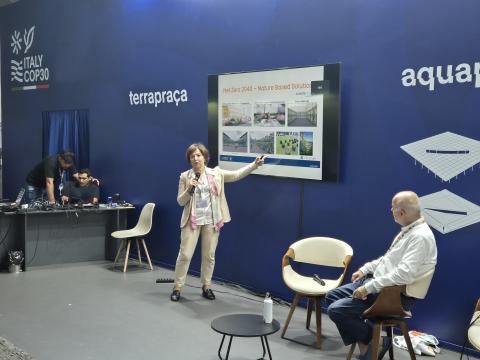 NomeVice-Rector Lombardi's speech at the event “Nature-Based Solutions for Resilient and Carbon Neutral Urban Areas”, Padiglione Italia
 - Immagine
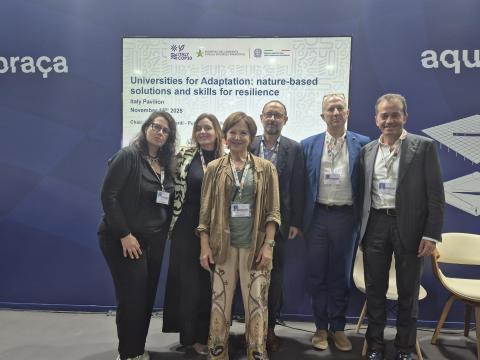 NomeFrom the left: Laura Corazza (UniTO), Carmen Aina (UPO), Patrizia Lombardi (PoliTO), Mario Ravera (PoliTO), Maurizio Tira (UNIBS, EUA), Piero Di Carlo (Ud'A)
 - Immagine
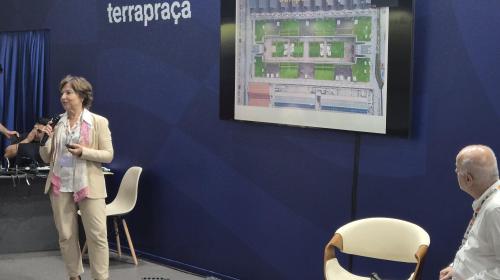
 NomeThe speech by Vice-Rector Mariachiara Zanetti at the event "High level formation in climate change performed by higher education institutions: learning by doing"


