

This section collects initiatives, services and tools promoted by Politecnico di Torino to encourage more sustainable, safe and efficient university mobility, particularly with regard to public transport, active and shared mobility, campus services, innovation projects and the actions introduced by the University to reduce the environmental impact of travel by the PoliTO community.
If you would like to know how to reach Turin and how to get around the city, visit this section.



Activities
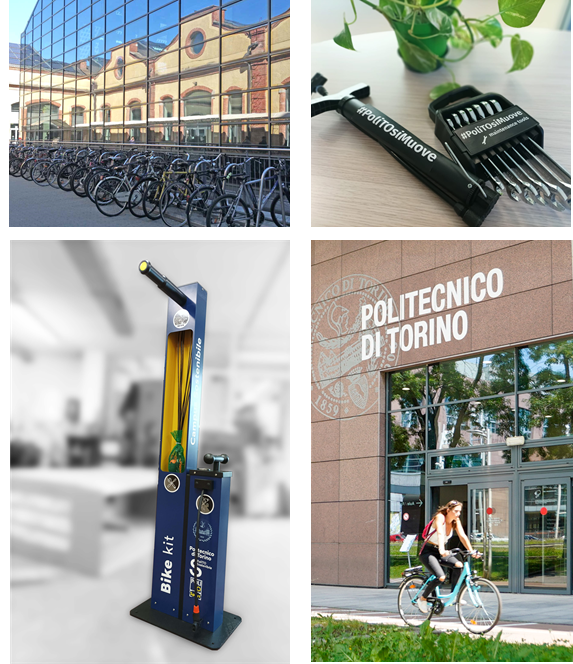
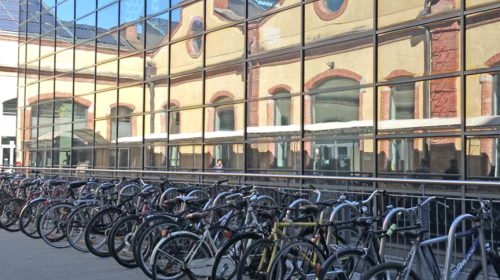
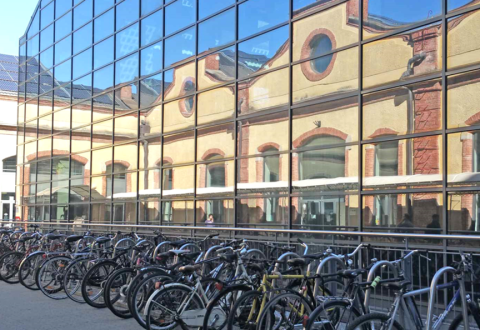
Politecnico di Torino has made available has made available dedicated parking areas for bicycles and scooters, located both near the entrances of the University’s campuses and within internal courtyards. The available spaces can accommodate up to 1,200 bicycles/scooters. A covered, video-surveilled area (unattended) is also available, accessible via badge.
Map of parking areas and access points (coming soon).
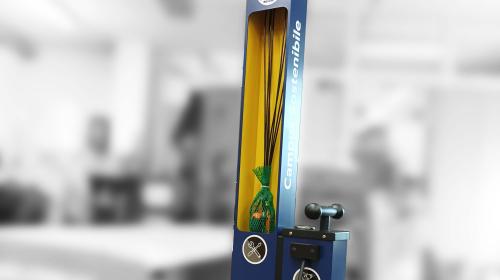
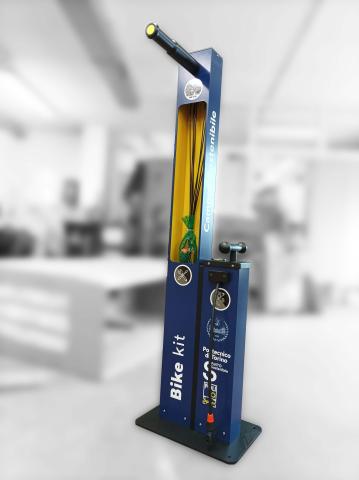
At each of the University’s Turin campuses, a maintenance kit (pump and combination wrenches) or a fully equipped bicycle repair station is available (including pump, screwdrivers, fixed and adjustable wrenches, tire levers, and Allen keys).
Objectives
Promote active mobility (*) with the aim of reducing urban traffic congestion and contributing to the reduction of CO₂ emissions in the atmosphere.
(*) The term “active mobility” mainly refers to cycling and walking mobility. It also includes alternative means of transport to motor vehicles that do not require registration, such as scooters, skateboards, segways, roller skates, etc.


- Immagine
 NomeKit manutenzione bici
 - Immagine
 NomeTotem riparazione bici
 - Immagine
 NomeRastrelliere


Activities
The University campuses are well served by the public transport network and are directly connected to the main railway stations and the metro line. To encourage the use of local transport options, the University has implemented incentive initiatives for both students and staff. In addition, thanks to an agreement with the City, University Smart Cards are equipped with a microchip that allows public transport subscriptions to be loaded directly onto the card.
Objectives
The aim is to promote local public transport (LPT) in order to reduce the use of private vehicles, alleviate urban traffic congestion, contribute to reducing local CO₂ emissions, improve the overall efficiency of mobility, and foster a more accessible, integrated, and sustainable transport system.
Activities
The City’s University campuses are widely served by shared transport services (scooters, e-scooters, bicycles).
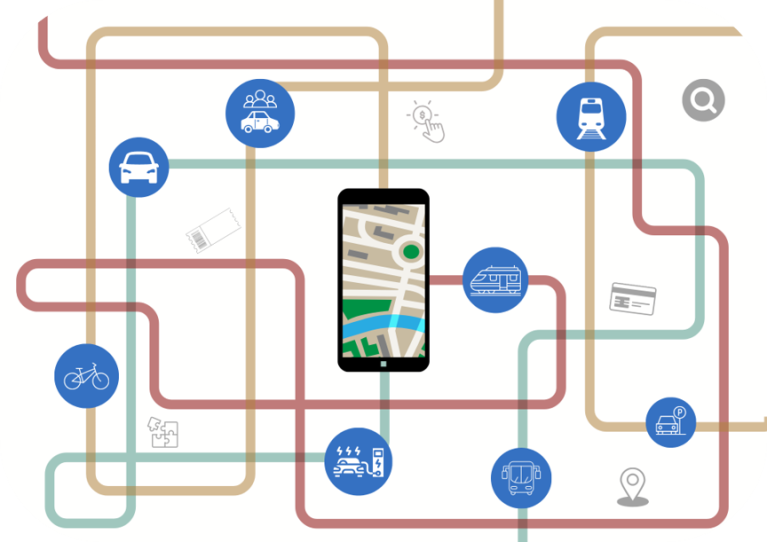
The University promotes incentive initiatives for both students and staff. It is also in ongoing dialogue with the city to implement an integrated public transport service (MaaS – Mobility as a Service), aimed at making user access increasingly seamless and oriented toward ensuring a wide range of mobility options.
For student benefits
Objectives
To promote the use of shared local transport services.
Activities
The Politecnico di Torino campuses are mainly located in urban areas well served by the local public transport network and with on-street paid parking spaces.
The University has its own allocation of parking spaces reserved for staff, which it has gradually reduced over time, from 1,200 to approximately 650.
To further discourage the use of private vehicles, the University offers an annual public transport pass in exchange for the return of the access tag to reserved parking facilities.
The new underground parking facility at the main campus will replace the existing internal parking areas, freeing up surface space that can be used by students. It will also be equipped with electric charging stations to support the growing market of electric vehicles (cars and motorcycles).
Objectives
To responsibly manage staff private vehicle parking in a green-oriented approach.
Activities
The Politecnico di Torino is taking part in a 12-month pilot of a corporate carpooling service, in collaboration with the Città Metropolitana di Torino, within the framework of the “AMICI – Azione di Mobilità Innovativa, Cooperativa e Integrata” project. The initiative aims to promote more sustainable, flexible, and lower-impact home-to-work commuting. The service can be activated by staff using their institutional @polito.it email through the Jojob Real Time Carpooling app and allows users to share trips with colleagues, certify journeys via QR code, access financial incentives, and monitor the environmental and economic benefits generated. The pilot also includes the collection of data to assess its effectiveness and its potential long-term integration into the University’s mobility policies.
Objectives
To promote shared mobility for commuting, reduce the environmental impact of regular travel, and evaluate the effectiveness of the service for possible structural integration into the University’s mobility policies.