

The Italian Fund for Applied Sciences (FISA) is a program established by the Ministry of Universities and Research (MUR) to support industrial research and experimental development projects with a strong innovative focus. Aimed at individual researchers from both the public and private sectors, the fund promotes initiatives that foster economic and industrial impact across Italy, particularly through collaboration between industry and academia. FISA supports research projects that demonstrate originality, innovation, and a high potential for socio-economic and industrial benefits.

COME-IN! tackles the complexity of painting consolidation, a non-reversible process requiring products tailored to different pictorial systems. Over three years, the project will develop a line of consolidation kits designed through scientific research and with conservators’ contribution, ensuring safer, more aware and user-friendly conservation treatments.

WEBFARE seeks to transform data produced by human online activity into a new form of capital – human rather than financial – based on need. This renewable and shareable capital stems from the digital traces of everyday life and aims to redistribute value to those most in need, promoting a new economy rooted in need.

The AI4CTI project aims to counter cyber threats such as phishing and scareware using Artificial Intelligence. It applies machine learning to text, images, audio, and video. The project envisions a scalable system for data collection and analysis to protect user devices and feed shared databases within cyber defence ecosystems.

AI4FREIGHT aims to make rail freight transport safer and more efficient through a real-time monitoring system based on digital twins. A low-power, high-performance computing unit will enable continuous wagon condition monitoring and predictive maintenance, reducing costs and improving the reliability of rail transport.
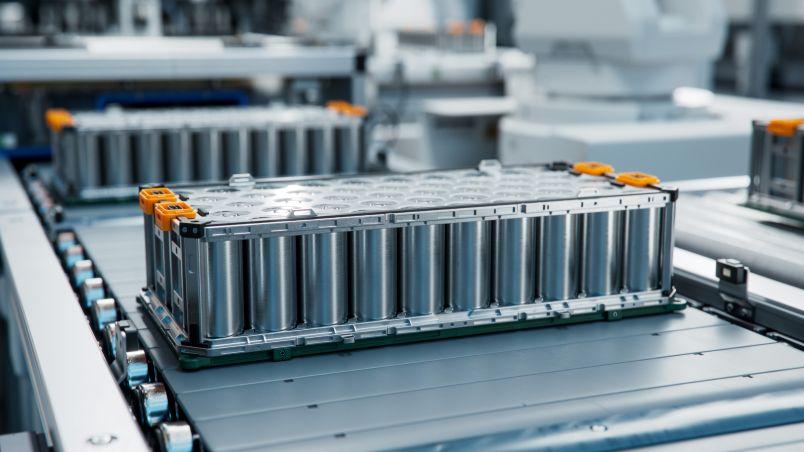
The GREEN2MOVE project focuses on sustainable potassium batteries, made from biomass-derived materials, in aqueous processes, and with a reuse-oriented design. It aims to bring this technology closer to industry, with applications in stationary renewable energy storage. It supports the energy transition and the development of European gigafactories by 2030.
