

Duration: 02/2023 - ongoing
Scientific Coordinator: Mara Ferreri
Project Type: Non-commercial collaboration agreement
PoliTO Role: Project collaborator
The project revolves around the following question: how can the social and solidarity economy sector help to decommodify and cooperativise housing? We start from an understanding of inhabitation in an intersectional way and towards more equitable transformation that places the needs of people and local communities at the centre.
Some of the intersecting issues include:
- how we connect with the environment and what mutual support networks can be created within and around our homes;
- what percentage of income is spent on housing, how often does this vary and how it can be transformed through collective ownership and mutual aid mechanisms;
- the impact of housing precarity and stability on physical and mental health;
- the distribution of social reproductive tasks, what inequalities can be identified and how they can be addressed.
With this project we want to advance practice-oriented understanding into some of these elements in order to systematise existing models of decommodification and cooperativization of housing, to support the development of social and solidarity economy tools and public policy frameworks towards social and territorial equity.
The general objective of the project is
- (OG1) to generate alliances through the research of cases of socio-economic innovation of the Social and Solidarity Economy in different territories of Spain, in order to transfer the knowledge generated to the whole of Spain and other European countries.
Two more specific objectives are:
- OE1. Create spaces for knowledge transfer: generation of a group of researchers and a joint work methodology.
- OE2. Generate a bank of analysis of good practices to identify the strengths and weaknesses that have existed in their development in order to generate improvements and extension.
OE1 has been achieved through the creation of a research team linked to universities in Italy, England and Spain, and third sector entities connected to housing including Talaios Koop and Coop57, and a shared methodology.
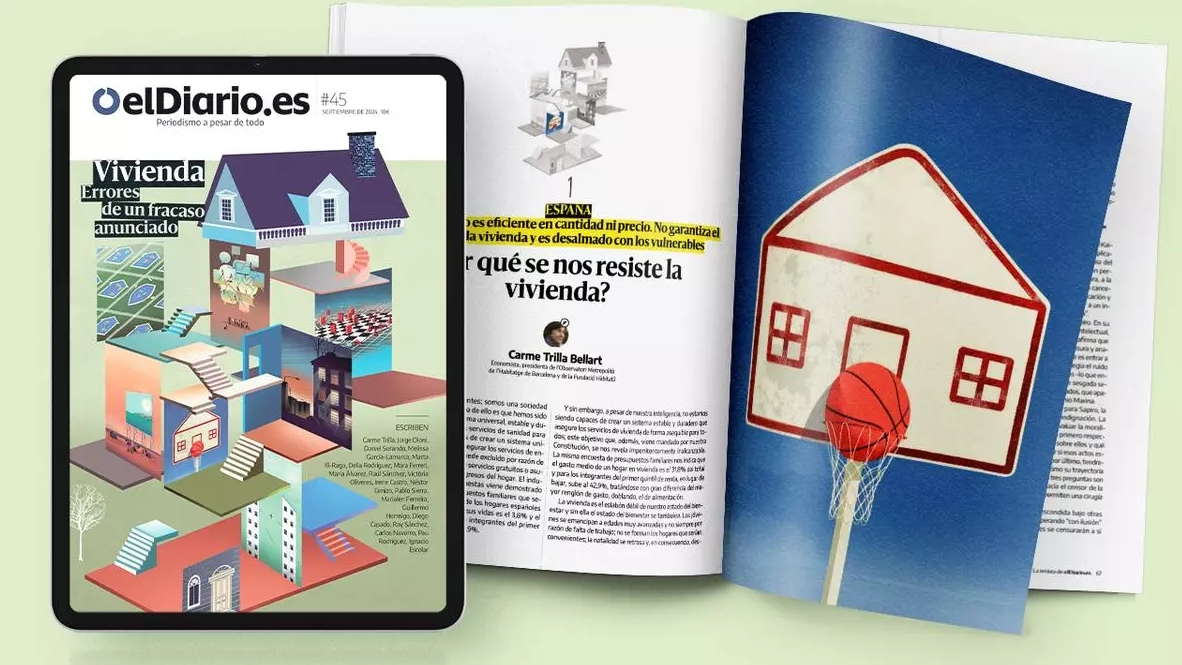
OE2 has been achieved through the qualitative analysis of 4 in-depth case studies of socio-economic, governance, ownership and fiscal innovation related to cooperative housing through qualitative interviews, site visits, focus group discussions and policy document analysis. These are: Cooperativa de vivienda dispersa (Poble Sec, Barcelona, Catalonia); Cooperativa La Titaranya (Valls, Catalonia); Cooperativa La Closca (Lleida, Catalonia); Cooperativa Katakrak (Iruña-Pamplona, Navarra). Expected results: results presentated at a multilingual event in Barcelona and on streaming (held in June 2024); article for national dissemination (September 2024, El Diario); monographic publication of the case studies, in Spanish, Catalan, English and Basque (planned for January 2025).
Involved Structure
- DIST, Interuniversity Department of Regional and Urban Studies and Planning
Partners
- Fundaciò La Dinamo,
- Coop57,
- Talaios Koop
Location
- Spain, Europe
Project Team
- Mara Ferreri, DIST, scientific advisor, coordinator and project researcher
- Melissa Fernández Arrigoitia, University of Bristol, Regno Unito, research fellow at Catalogna
- Lorenzo Vidal Folch, Universitat Oberta de Catalunya, Spain, research fellow at Catalogna
- Beñat Irasuegi Ibarra, Talaios Coop, Errenteria, Paese Basco, research fellow at Paese Basco e Navarra
Sustainable Development Goals (SDGs)
3. Good health and well-being
5. Gender equality
10. Reduced inequalities
11. Sustainable cities and communities