

PoliTO and Tsinghua University together for rural reactivation through architecture along Ancient Trails

PoliTO and Tsinghua University launch a joint research and education initiative dedicated to rural revitalization along ancient trails. Building on a longstanding academic partnership with Tsinghua University, one of the world’s leading academic institutions, the project explores a Sino-Italian approach to rural revitalization along ancient trails.
The initiative, titled Ancient Trails and Their Possible Futures: Rural Reactivation Through Architecture along the Southern Silk Road (Yunnan, China) and the Via Francigena (Italy), positions ancient trail networks as laboratories for contemporary reflection on rural territories, investigating how architecture can foster new forms of liveability and meaningful engagement beyond urban contexts. Within this shared framework, the initiative addresses broader research questions: What is needed beyond cities? How can architectural interventions shape the future of rural areas and foster new forms of liveability outside urban contexts? Through this cross-cultural and interdisciplinary approach, the joint initiative aims to advance research on rural areas, foster innovative design strategies, and contribute to sustainable rural development in both China and Italy.
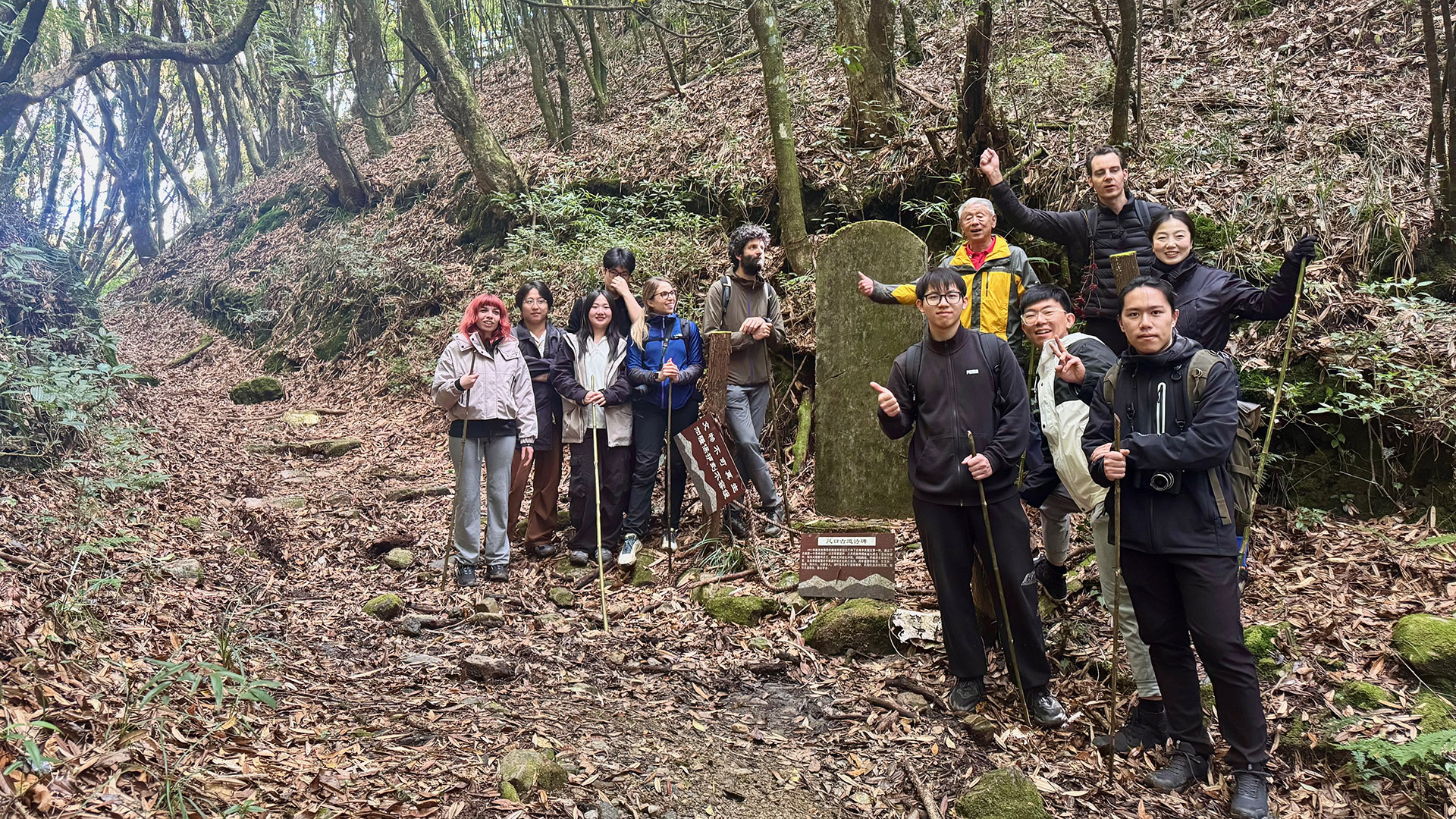
The first phase of fieldwork research was conducted in Yunnan in November 2025, during which the Politecnico di Torino team participated in a week-long site visit and walk along the Southern Silk Road, part of the historic Tea Horse Road, passing through the villages of Shuizhai, Pingpo, and Dahaoping. The group engaged with local administrations and key stakeholders, gaining firsthand insights into the social, cultural, and territorial dynamics of the area. A second phase is scheduled along the Via Francigena in April 2026, when the PoliTO will host the group from Tsinghua University, allowing for a comparative analysis of the two cases and their respective possible approaches to rural revitalization.
On the Politecnico di Torino side, the Department of Architecture and Design (DAD) is leading the initiative, coordinated by Associate Professor Roberto Dini (DAD, IAM) and Lidia Preti, Phd, and Research Assistant (DAD, China Room), on the TNE project LEGO, focused on “Italy–East Asia Cooperation: from Local Expertise to a Global Outlook.” The team also includes five students from the Master’s programs in Architecture Construction City, and Architecture for Sustainability, who will develop their master’s thesis projects within the scope of the initiative. At Tsinghua University, the initiative is led by Associate Professor Martijn de Geus of the School of Architecture, together with three 5th-year undergraduate students, who will likewise develop their thesis project within this framework. Local partner for the initiative in Italy is the Courmayeur Mont Blanc Foundation, which hosted the PoliTO team in October for a preliminary field visit and will continue to support the joint group during the April 2026 visit.
Aligned with the priorities of Politecnico di Torino’s 2024‑2030 Strategic Plan, the initiative reflects the University’s commitment to internationalization and to leveraging public engagement as a key strategy for societal involvement. Conceived within the broader framework of cooperation between PoliTO, the China Room research group, and Tsinghua University, and with a renewed focus on research in rural areas, the project brings together faculty, researchers, and students to explore innovative models of architectural and territorial regeneration for rural territories. The initiative is partially funded through the National Recovery and Resilience Plan (PNRR) – Mission 4 “Education and Research”, specifically within the framework of the TNE project LEGO Italy–East Asia Cooperation: from Local Expertise to a Global Outlook.


- Immagine
 NomeThrough the ancient trails of the Southern Silk Road in China 1
 - Immagine
 NomeThrough the ancient trails of the Southern Silk Road in China 2
 - Immagine
 NomeThrough the ancient trails of the Southern Silk Road in China 3
 - Immagine
 NomeThrough the ancient trails of the Southern Silk Road in China 4
 - Immagine
 NomeThrough the ancient trails of the Southern Silk Road in China 5
 - Immagine
 NomeThrough the ancient trails of the Southern Silk Road in China 6


