

Politecnico and Kenya: mobility, numbers and impact of a growing collaboration

In recent years, Politecnico di Torino has signed a series of student and staff exchange agreements with several Kenyan universities – the Technical University of Mombasa, the Maseno University, the University of Nairobi and the Jomo Kenyatta University of Agriculture and Technology – developing collaborations in the fields of architecture and the built environment, urban and regional planning, mathematical sciences, and energy engineering.
Mobility activities are part of a structured and multifaceted cooperation involving faculty members from Politecnico di Torino across different departments. In particular, for the Technical University of Mombasa, the reference person is professor Francesca De Filippi from the Department of Architecture and Design-DAD, Adjunct Vice-Rector for international scientific cooperation and experimental internationalisation activities; for Maseno University, professor Francesca De Filippi and Andrea Pollio, researcher at the Interuniversity Department of Regional and Urban Studies and Planning-DIST; for Jomo Kenyatta University of Agriculture and Technology, David Chiaramonti and Michel Noussan, professors at the Department of Energy-DENERG; for the University of Nairobi, Letterio Gatto and Enrico Bibbona, professors at the Department of Mathematical Sciences “G. L. Lagrange”-DISMA.
These collaborations include semester-long student mobility for coursework or thesis work, as well as exchanges of academic, research and administrative staff for teaching and training activities, and have generated a growing number of mobilities, carried out both through the Erasmus+ International Credit Mobility programme and within the PNRR TNE WAGON2AFRICA project.
Since 2023, when the first agreements were signed, a total of 40 mobilities have been carried out, of which 22 under the Erasmus+ programme and 18 within the TNE WAGON2Africa project. Mobility flows are predominantly incoming (35), confirming PoliTO’s role as an attractive hub for international education.
Overall, mobilities have mainly involved students (33 mobilities), alongside 7 mobilities of academic and administrative staff, contributing to the development of teaching, research and international cooperation activities. As for the distribution among partner universities, the most extensive collaboration is with the Technical University of Mombasa, with a total of 22 mobilities. This is followed by the University of Nairobi with 8 mobilities, Jomo Kenyatta University of Agriculture and Technology with 6 mobilities, and Maseno University with 4 mobilities.
Beyond the numbers, what emerges most strongly is the tangible impact of these experiences, as also highlighted in the testimonies published by the Technical University of Mombasa. Student feedback highlights how mobility at Politecnico often represents a turning point, influencing both academic paths and professional opportunities.

As Faith Wangari, a student from the Technical University of Mombasa, explains: “I cannot state how just 5 months of the program changed my perspective in career advancement and more so my social-cultural skills. Needles to say, I learnt alot academically. I'm currently seeing the fruits of the program, how it provided me an opportunity to be employed at one of the top Architectural firms in Kenya and Africa. It's a tough world out here, but having the Erasmus program in my portfolio helped me cut through the competition for the betterment of me and my family”.
Alongside professional outcomes, students also emphasise personal and cultural growth. The international experience is described as an opportunity to develop adaptability, openness and a deeper awareness of one’s role in a global context. Jacob Mbogo Ogot, also a student from the Technical University of Mombasa, reflects on his experience: “I would say my stay at PoliTO was really fun. And by fun I mean experiencing a full wave of emotions from getting to experience a new culture different from my home country, interacting with people from diverse backgrounds, and immersing myself in a completely new academic environment. Even adapting to new laws was daunting but rewarding. It wasn’t just about studying abroad for me; it was about exploring, and learning to feel at home even when you’re far from it!”.
From a teaching perspective, the effectiveness of PoliTO’s approach, based on interaction, collaborative work and continuous feedback, clearly emerges. As Juliana Teresa Anyango, a student from Maseno University, notes: “My key take away from the experience was the institutional set up of Politecnico di Torino promotes a healthy and robust educational foundation. My supervisor used different, creative, contemporary and responsive ways to deliver classes and examination during the coursework. All the sessions were super interesting. My mobility was on research work and with his help I managed to develop a complete research proposal which had taken me years.”
Mobility has also supported research development and academic exchange, through participation in conferences, summer schools and international scientific events. In some cases, these experiences have led to new collaborations, as highlighted by Samson N. Njoroge, PhD student from Jomo Kenyatta University of Agriculture and Technology: “My time in PoliTO was very eye opening as I interacted with very innovative minds and got to learn about the postgraduate research work in the energy sector. I also got to forge new academic interactions with the faculty which have resulted in the opening of new collaborative research areas in the field of Solar Energy and Nuclear Energy”.
At the same time, staff mobility has contributed to strengthening institutional cooperation. According to professor Kalandar Kamalkhan, from the Technical University of Mombasa: “The mobility that I undertook has heled me understand the intricacies of the Erasmus+ Credit Mobility Programme and to become an “ambassador” of the Programme”.
However, collaboration between Politecnico and Kenyan universities has not been without challenges, particularly regarding outgoing mobility. As reported by PoliTO student Pierre Carlos Kuetche Chombong, his experience in Kenya was characterised on the one hand by a welcoming environment, but on the other by some organisational challenges related to the availability of supervision for thesis activities, and periods of disruption such as strikes. At the same time, very positive experiences also emerge, such as that of Jessica Piano, a PoliTO student enrolled in the Master’s Degree in Architecture for Sustainability, on mobility at the Technical University of Mombasa: “My experience in Kenya was unique, extremely meaningful and enriching. I had the opportunity to immerse myself in a different context, engaging with professors and peers who consistently supported me throughout the period. Despite the challenges related to the strike, my research was able to continue steadily. It was also enriching to attend other courses, which allowed me to explore different approaches and closely observe a different academic and cultural environment”.
In this context, mobility between Politecnico and Kenyan universities represents not only a training opportunity, but a concrete investment in building global competences and long-lasting academic relationships in a region that is becoming increasingly strategic.


- Immagine
 NomeProfessor De Filippi at the Technical University of Mombasa
 - Immagine
 NomeA lecture by Alex Sidney Maninga, professor at the Technical University of Mombasa
 - Immagine
 NomeA lecture by Kalandar Kamalkhan, professor at the Technical University of Mombasa
 - Immagine
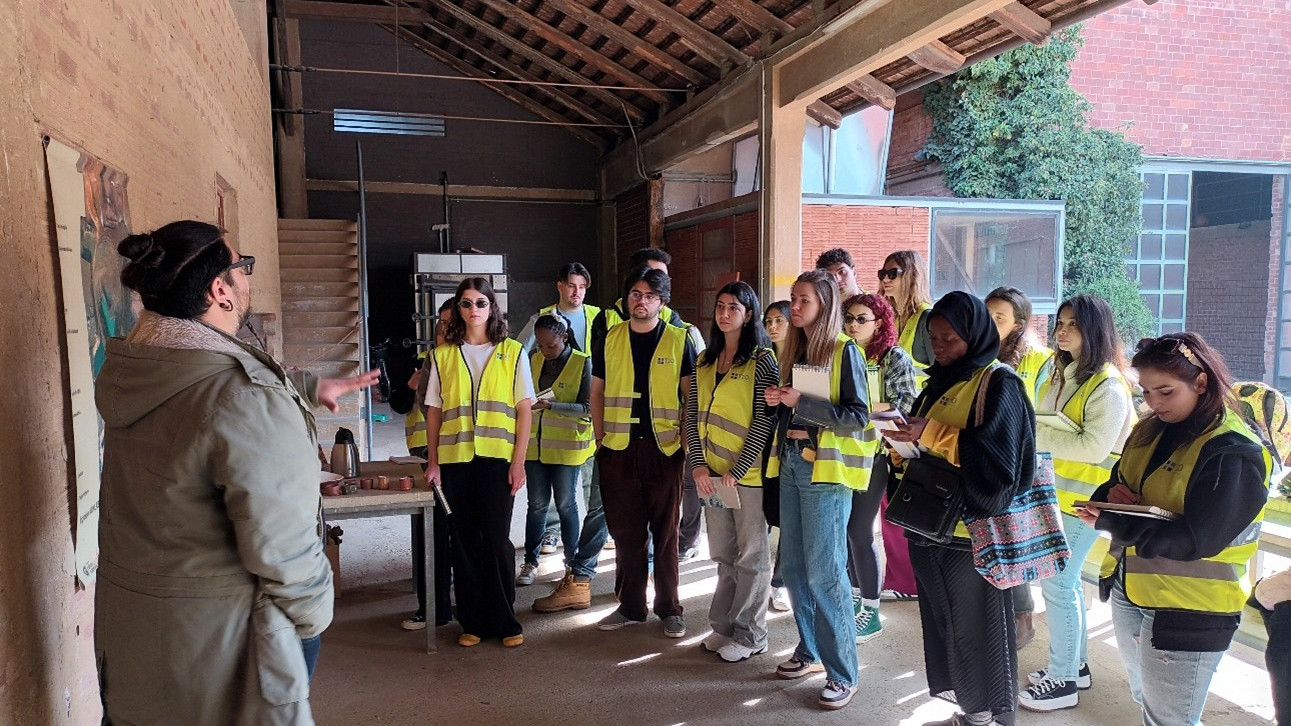
 NomeThe collaboration between Politecnico and Kenyan universities


