

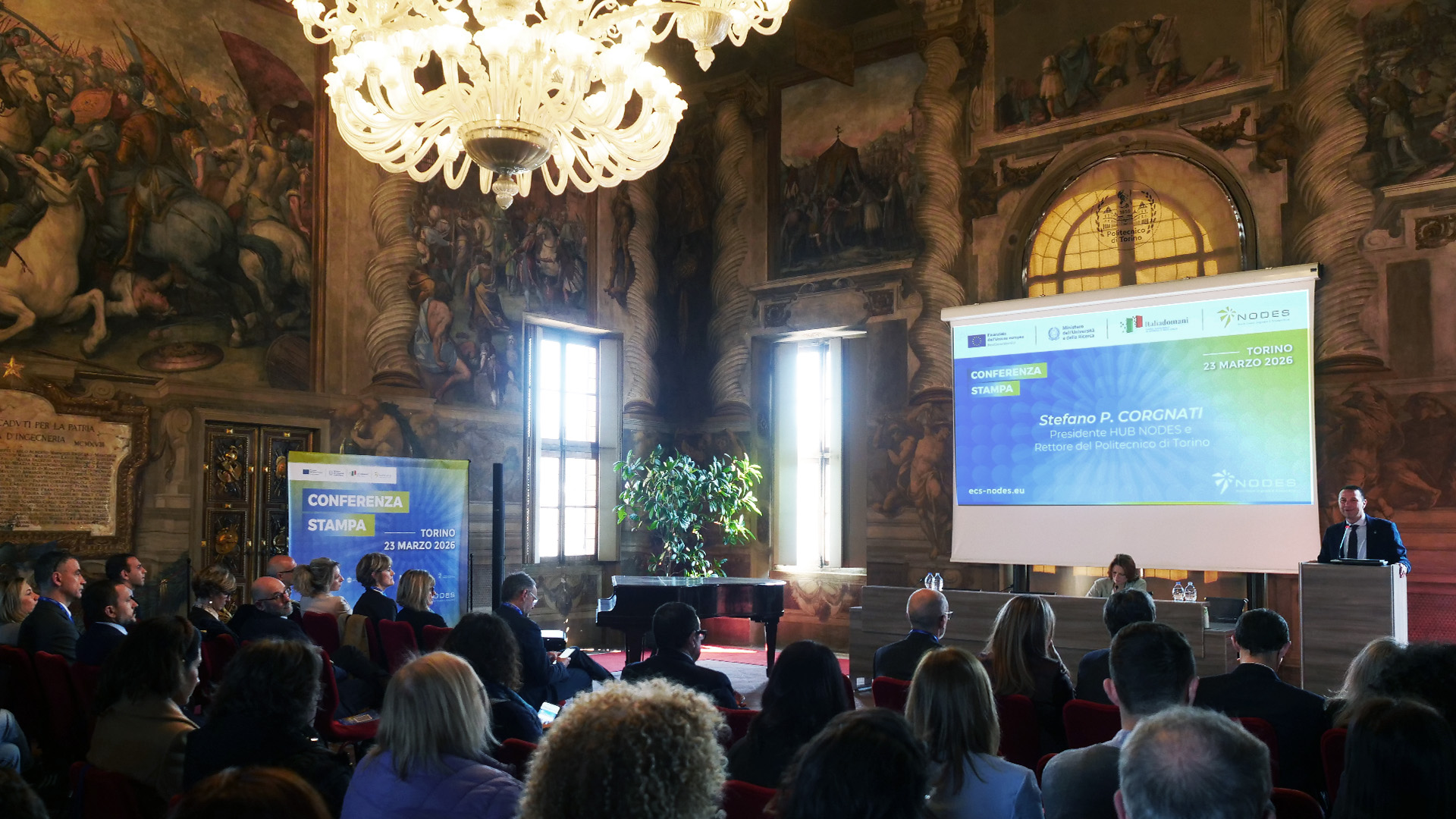
NODES: three years of innovation and collaboration between universities and companies

Three years of activity, more than €112 million invested, 33 partners including universities, research centres, and innovation stakeholders, over 300 companies involved, and more than 500 projects developed, among them, 183 funded industrial project proposals. These are some of the key figures of NODES-Nord Ovest Digitale e Sostenibile, promoted by Politecnico di Torino, which is now concluded and is making its results available to the wider industrial system.
NODES is one of the 11 Innovation Ecosystems funded by the Ministry of University and Research under the National Recovery and Resilience Plan. Through its activities, it has contributed to strengthening the research and innovation system in Northwestern Italy and across the country. NODES aimed to enhance the capabilities of universities, companies, and territories by strengthening collaboration: accelerating technology transfer, supporting the creation of new entrepreneurial initiatives, and fostering the development of advanced skills to support the dual digital and ecological transition. Activities were mainly carried out in Piedmont, Valle d’Aosta, and western Lombardy, while also strengthening collaboration with universities and companies in Southern Italy.
NODES involved hundreds of researchers, innovators, students, professionals, and company technicians, fostering the development of new skills and promoting a new model of collaboration between research and industry. Constructive collaboration and practical impact were the guiding principles behind its activities.
Which major industrial sectors did NODES address? The program was structured into seven thematic “Spokes”, each dedicated to research and innovation in strategic areas for digital and sustainable development: Industry 4.0 for Sustainable Mobility and Aerospace (Spoke 1); Green Technologies and Sustainable Industry (Spoke 2); Culture and Tourism Industry (Spoke 3); Digital Innovation Toward Sustainable Mountain (Spoke 4); Industry for Health and Silver Economy (Spoke 5); and the Primary and Secondary Agroindustry sectors (Spokes 6 and 7).
Politecnico coordinated Spokes 1 and 7 and contributed to activities in the areas of sustainable industry, mountain environments, and health.
Over its three years of activity, Politecnico involved more than 100 faculty members and recruited over 140 researchers, who contributed both to “Flagship” research projects, four of which were directly coordinated by the university, and to 16 Proof of Concept (PoC) initiatives. These PoCs proved to be key tools for fostering technology transfer and bringing innovations closer to market, as evidenced by the five spin-offs created from PoC activities.

Politecnico also directly supported industrial innovation: it allocated and managed over €10 million to fund 41 industrial research projects, developed in collaboration with 72 companies of all sizes.
The content and spirit of NODES were well captured by Rector Stefano Corgnati, President of the NODES HUB, during the closing press conference: “Innovating today means transforming scientific knowledge into tangible value for companies and territories. The NODES Ecosystem has helped build bridges between universities, research, and the productive system, supporting the country’s digital and ecological transition. The project has been an excellent testing ground for assessing the territorial impact of the technological and scientific expertise provided by universities”.
Additionally, Chiara L. G. Ferroni, Director General of the NODES Innovation Ecosystem, stated: “NODES has shown that an innovation ecosystem can truly work when universities take on a central role, not only in producing knowledge but in building connections between research, companies, and local territories. Over three years, we worked as a system, testing a model capable of combining rigor, speed, and collaboration. The most important result lies not only in the figures achieved, but in the relationships we have built, which will continue to generate value beyond the conclusion of the program.”
All NODES solutions are now available to companies, which can explore the results achieved across the different Spokes on the Ecosystem’s website.