

Double Funding for Politecnico di Torino in the Italy–Uzbekistan Call
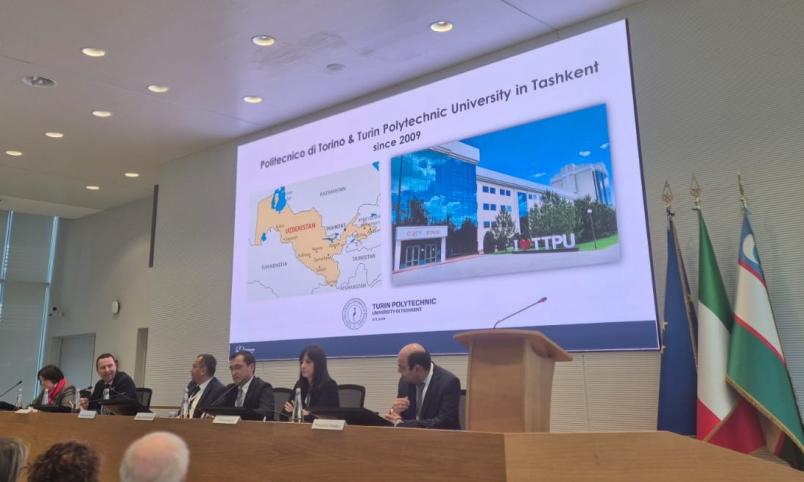
With two funded projects out of ten selected in the Italy–Uzbekistan bilateral call, Politecnico di Torino confirms its strategic role in academic cooperation with Central Asia. The University is the only Italian institution with two initiatives included among the 10 approved projects, selected from a total of 200 proposals; both projects will be developed in collaboration with the Turin Polytechnic University in Tashkent.
“We are very pleased with this result, which sees us collaborating with the Turin Polytechnic University in Tashkent, as it clearly represents a shift in the approach that characterizes our presence in Uzbekistan – comments Rector Stefano Corgnati – From a focus primarily centered on education, we are now moving toward a combination of ‘education & research,’ in line with the path we are also pursuing at PoliTO".
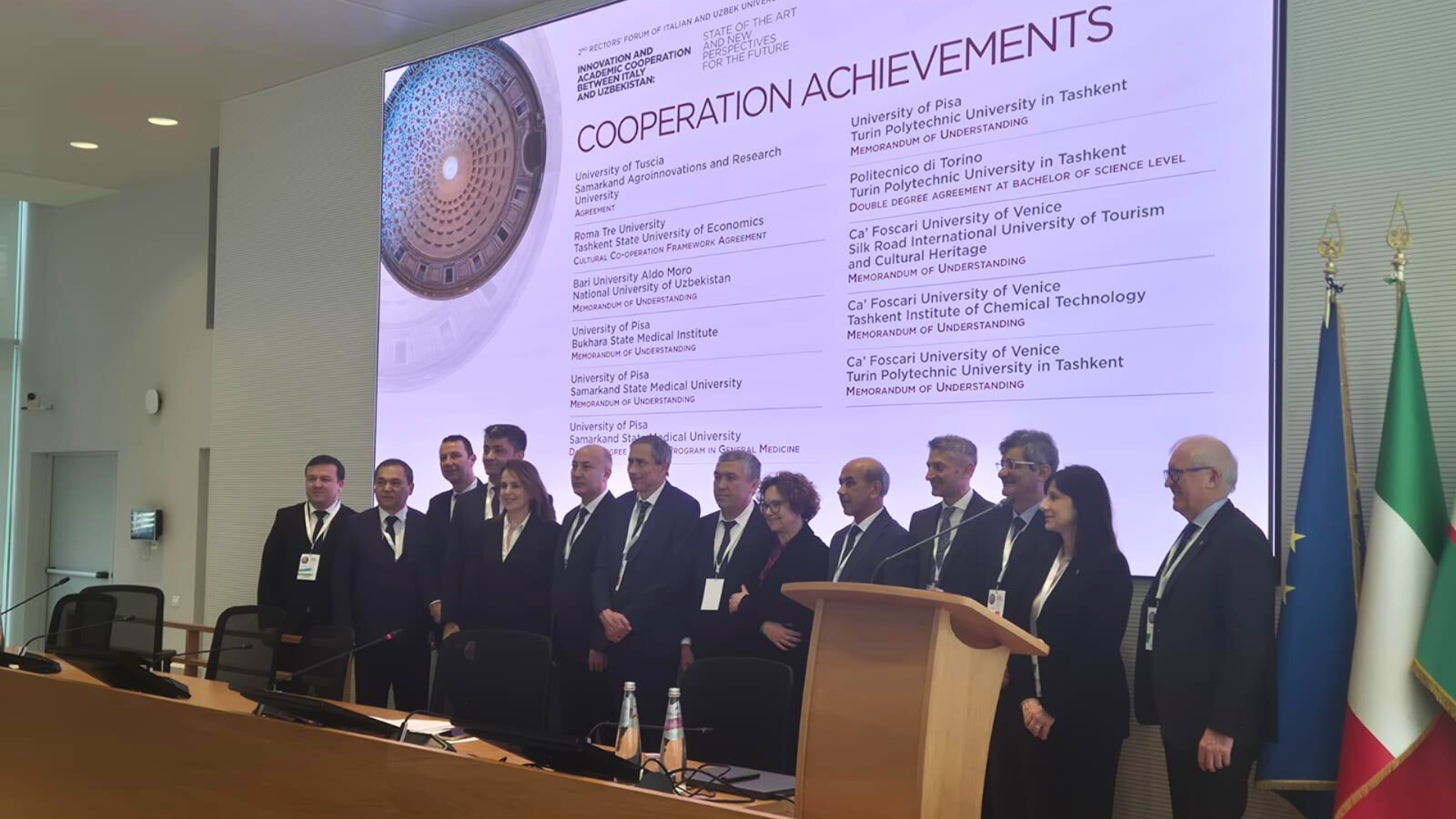
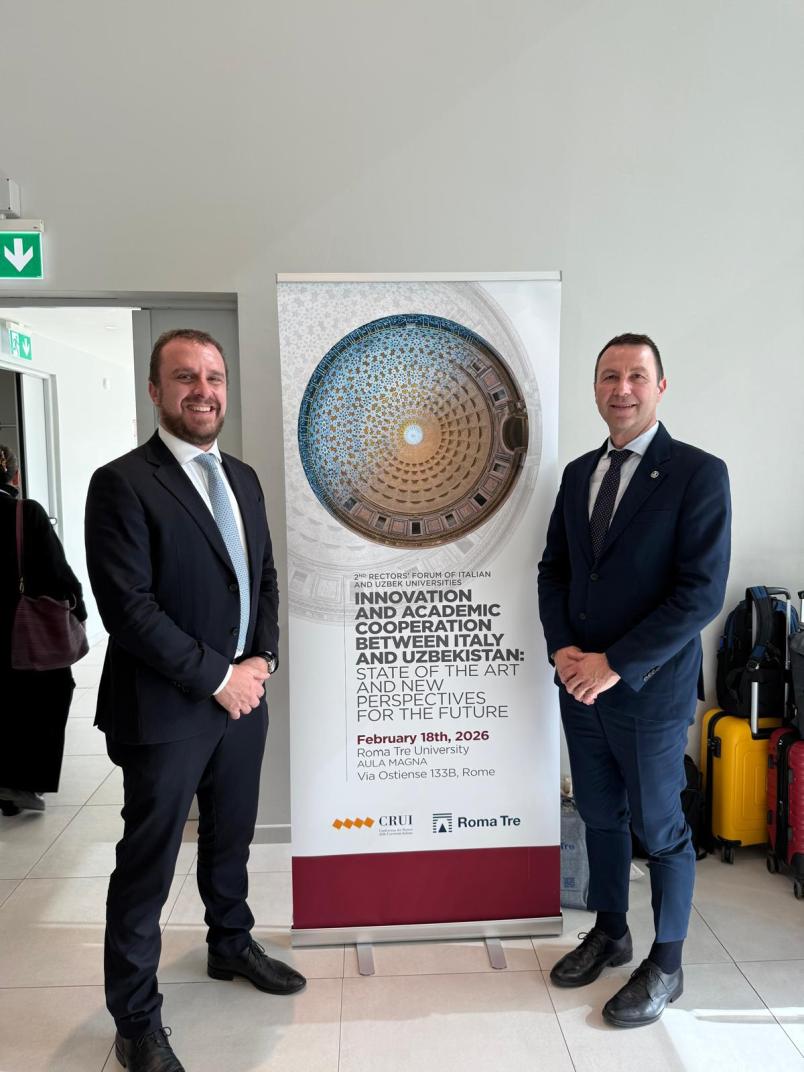
The winning projects were announced during the “2nd Rectors’ Forum of Italian and Uzbek Universities”, held on February 18 in Rome as part of the bilateral meeting “Innovation and academic cooperation between Italy and Uzbekistan. State of the art and new perspectives for the future,” in the presence of the Italian Minister of University and Research, Anna Maria Bernini, and the Uzbek Minister of Higher Education, Science and Innovation, Kongratbay Sharipov.
Rector Corgnati and Vice Rector for Internationalization Alberto Sapora represented the Politecnico di Torino at the meeting, which focused on innovation and academic cooperation between Italy and Uzbekistan.
“This forum and these research results, as always, beyond the excellence of individuals, reflect the outcome of teamwork consolidated over time. In every respect, Politecnico di Torino represents a well-established academic reference point throughout Central Asia”, concludes Vice Rector for Internationalization Alberto Sapora.
The Projects
The two projects coordinated by the University are called NOVABONE and W4GC. Following a technical and scientific evaluation, they were selected and admitted for funding under the international call “Joint Actions and Programmes in the Framework of the Memorandum of Understanding on Cooperation in the Fields of Science, Technology and Innovation 2024–2027”.
NOVABONE
Regenerating bone through next-generation bioactive materials: with NOVABONE – Novel Technologies for the Development of High-Added-Value Bioactive Glass Scaffolds and Coatings for Bone Repair – PoliTO’s research aims to significantly innovate treatment strategies for critical bone defects. The project’s scientific coordinator for PoliTO is Professor Francesco Baino of the Department of Applied Science and Technology-DISAT, and it is developed in synergy with the Politecnico di Milano, the Turin Polytechnic University in Tashkent, and the Tashkent State Dental Institute.
Starting from the issue of severe bone loss caused by trauma, tumors or infections – conditions that generate non-self-healing defects and entail high clinical and social costs – NOVABONE proposes the use of bioactive glasses to promote bone tissue regeneration. The project includes the development of porous scaffolds for tissue engineering and bioactive coatings designed to enhance the osseointegration of metallic implants.
A suitable bioactive glass composition will be selected and optimized for both 3D printing of scaffolds and coating of prostheses; the resulting prototypes will be physically and mechanically characterized and subjected to in vivo testing to assess their clinical effectiveness.
W4GC
The second project focuses on the sustainable management of water resources in the cities of the future. W4GC – Water for Growing Cities, coordinated by Professor Riccardo Vesipa of the Department of Environment, Land and Infrastructure Engineering-DIATI, is developed in collaboration with the Turin Polytechnic University in Tashkent and the University “G. D’Annunzio” of Chieti-Pescara.
The objective is to define a water-neutral urban district model capable of integrating planning, innovative technologies and efficient resource management. The project includes the analysis of the urban hydrological cycle, the assessment of policies and solutions already adopted—such as green walls and roofs or rainwater harvesting systems—and the development of criteria for new strategies adapted to the regional context.
Expected outcomes include guidelines for quantitative urban hydrology models, a blueprint for designing water-neutral districts, and recommendations for integrating advanced technologies and IoT into smart cities. The initiative aims to generate short-, medium- and long-term benefits by improving water supply, reducing flood risk, and promoting the closure of the urban water cycle. The consortium will also operate as a Competence Center in Central Asia, contributing to steering urban development toward greater water sustainability.