


An "open", customisable chip for the industry of the future
A chip adaptable to the needs of businesses, designed to be flexible, customisable and cost-effective. This is the result of research carried out by the Department of Electronics and Telecommunications-DET, within the extended Partnership SERICS - Security and Rights in CyberSpace, a PNRR project funded by the Ministry of University and Research-MUR. The chip, named Polheepo, is currently in the testing phase and could be available on the market by the end of the year.
"We have developed a digital integrated circuit with several features of potential interest to businesses, which can be summed up in remarkable flexibility of use, as well as the ability to customise the chip for specific production needs", explains Maurizio Martina, professor at DET and lead researcher on the project, carried out by the department's doctoral students.
The flexibility of the Polheepo chip stems from its design, developed using the open RISC-V architecture, the open standard for creating processors that execute "open" instructions and can be modified with ease to meet specific use requirements. "RISC-V is now a fairly mature architecture: building on this, Politecnico, together with other public and private actors, is developing an ecosystem that is itself open, allowing its full potential to be harnessed", adds Luigi Giuffrida, doctoral student at DET, who continues: "The challenge now is to build the practical applications that make RISC-V a major asset for businesses". With this in mind, the research team has integrated AI accelerators and post-quantum cryptography onto the RISC-V processor, making them well-suited to the vast majority of edge, embedded and low-power applications across multiple sectors.
"The chips available on the market today offer excellent performance, but with one significant limitation: they are essentially all closed and hard to customise – observes professor Martina – Any modification requires highly specific expertise and comes at considerable cost".
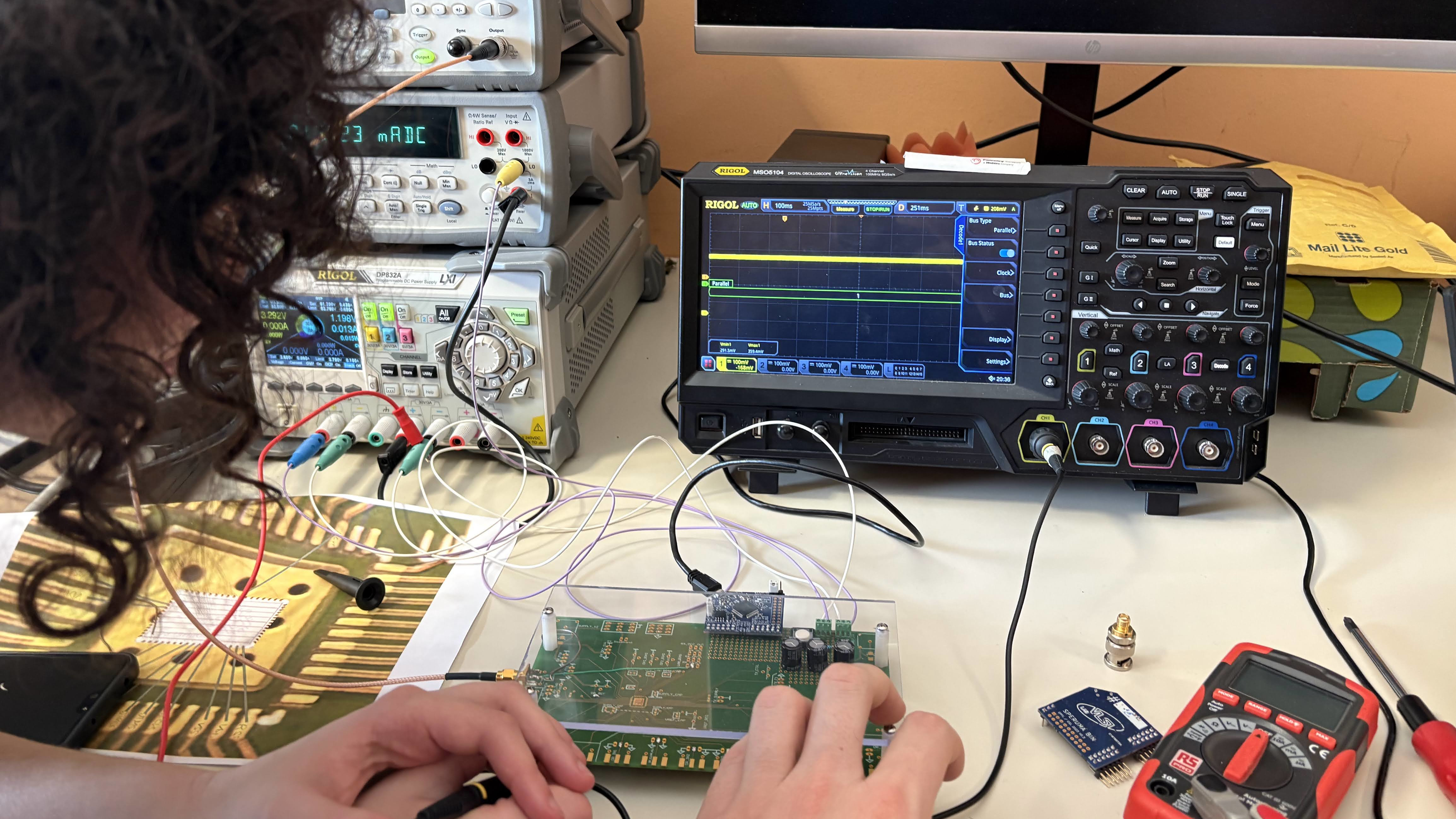
The DET team has already tested the basic functionality of the Polheepo chip and has begun the first tests on engineered boards, ahead of planned experiments in the biomedical and agricultural fields.
"By the end of 2026 we expect to start working with businesses too, modifying this chip or perhaps developing new accelerators – concludes professor Martina – In theory, we can work across all sectors".