

Tailored electrodes, ready for industrial applications
New LIG electrodes, adaptable to users’ requirements and “easy” to manufacture. A dual achievement by the Materials and Processes for Micro and Nano Technologies-MP4MNT research team of the Department of Applied Science and Technology-DISAT.
Their invention is now patented and available to manufactures and innovation partners.
Marzia Quaglio, leading the team and professor at DISAT, and Giulia Massaglia, researcher of the same department, explain the context of the discovery: “We started from previous experience in two sectors, flexible sensors and energy and gas transport. What we got is a way of producing LIG, tridimensional electrodes. These are A, conducive on all three dimensions, and B, selectively porous to allow fluid transportation”.
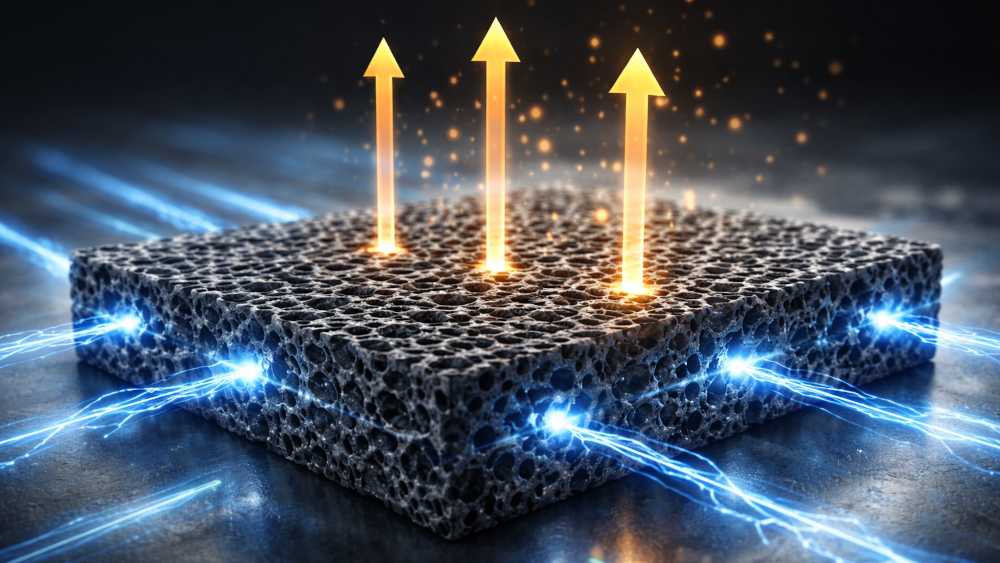
The production process output is Laser-Induced Graphene, or LIG, that is, a three-dimensional, porous, and conductive form of graphene produced through localized photothermal pyrolysis of a synthetic polymer. This process uses a laser that generates very high temperatures in a localized area, breaking the chemical bonds of the polymer and reorganizing the carbon atoms into a graphene-like structure.
“Our process – continues professor Quaglio – is completely different from traditional electrodes industrial processes”. The key innovations are twofold. The patented method product (the electrode) is highly adaptable to users’ needs, both shape and performance wise. Secondly, the process is easily integrated into existing production lines.
The potential applications are also wide-ranging: from biomedicine to energy systems, from integration into specialized fabrics to rehabilitation tools and devices, all the way to the food and packaging industries.
At this stage, the researchers are now looking for industrial partners to pursue three angles: tailoring the electrode to a specific set of industrial needs, applying them in reals products, and developing applications for the patented production process.