


An Advanced Skills Course in Nairobi for the Green Transition
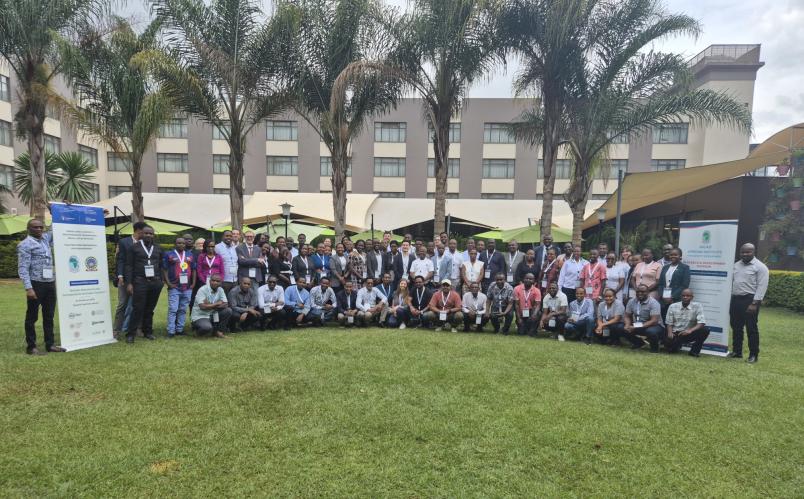
Transforming agricultural residues and marginal lands into pillars of the global bioeconomy: with this objective, the Advanced Skills Course (ASC) entitled “Biofuels, Bioproducts and Biomaterials for the Green Transition” was inaugurated today in Nairobi. The initiative is part of the WAGON2AFRICA project, funded by the Italian Ministry of University and Research-MUR under the TNE (Transnational Education Initiatives) programme, within the framework of the National Recovery and Resilience Plan (PNRR). Coordinated by Politecnico, WAGON2AFRICA project focuses on the development of a network of Italian and African universities aimed at fostering cooperation and sharing best practices, through academic staff and student exchanges, as well as the delivery of advanced training courses.
The course, hosted at the Tamarind Tree Hotel from 16 to 20 February, addresses natural resource management according to the Water-Energy-Food (WEF) Nexus model: an integrated and synergistic approach in which water, energy and food are managed as components of a single ecosystem to be enhanced. The aim is to train a new generation of experts capable of regenerating soils and developing carbon-negative business models based on the valorisation of agricultural and urban residues. The course will be attended by around 70 participants, including teachers, researchers, professionals and students from various East African countries: Kenya, Uganda, Tanzania, Rwanda, Burundi, Ethiopia, Somalia, Sudan, Zimbabwe and Malawi. This broad geographical representation testifies to the growing centrality of the bioeconomy in regional development strategies.
The project was presented to the Ambassador of Italy to Kenya, H.E. Vincenzo del Monaco, and to the Scientific Attaché of the Italian Embassy, Fabio Santoni. During the meeting, further areas of bilateral cooperation between Italy and Kenya were explored, confirming the significant opportunities for collaboration between the two countries, also in light of the recent mission to Nairobi by the Deputy Minister for the Environment and Energy Security, Vannia Gava. On that occasion, the main areas of energy cooperation within the Mattei Plan were examined in depth, with a particular focus on the development of sustainable biofuels, geothermal energy and hydrogen. In this context, higher education – such as the recently launched Advanced Skills Course – plays a fundamental role in providing concrete support for project initiatives and promoting the transfer of technological and scientific skills.
Under the scientific direction of David Chiaramonti, professor at the Department of Energy-DENERG and Bioenergy and Biofuels Coordinator - University Project Representatives on activities supporting relations with local, national and European government bodies, and Hiram Ndiritu, professor at Jomo Kenyatta University of Agriculture and Technology (JKUAT), the five-day programme addresses the main pillars of the green transition in a comprehensive manner.
Considerable attention is devoted to carbon markets and climate policies, including an economic analysis of emissions trading mechanisms and a reflection on the socio-economic implications of biomass utilisation in Africa, within the framework of the new decarbonisation targets and the specific regulatory framework in place in Kenya and the EU.
A second area of focus concerns the defossilisation of transport, with particular attention to sustainable aviation fuels (SAF) and solutions for maritime transport and heavy-duty road transport, key sectors for the reduction of global emissions. The course also examines the main biomass conversion technologies, ranging from thermochemical and biochemical processes to anaerobic digestion, highlighting their potential in the production of renewable energy, biopolymers and other high value-added bioproducts.
Finally, the synergy between agriculture and energy within the framework of the circular bioeconomy is explored in depth, with particular emphasis on the production of biofertilisers from organic residues, capable of improving soil fertility and reducing dependence on fossil-based chemical inputs.
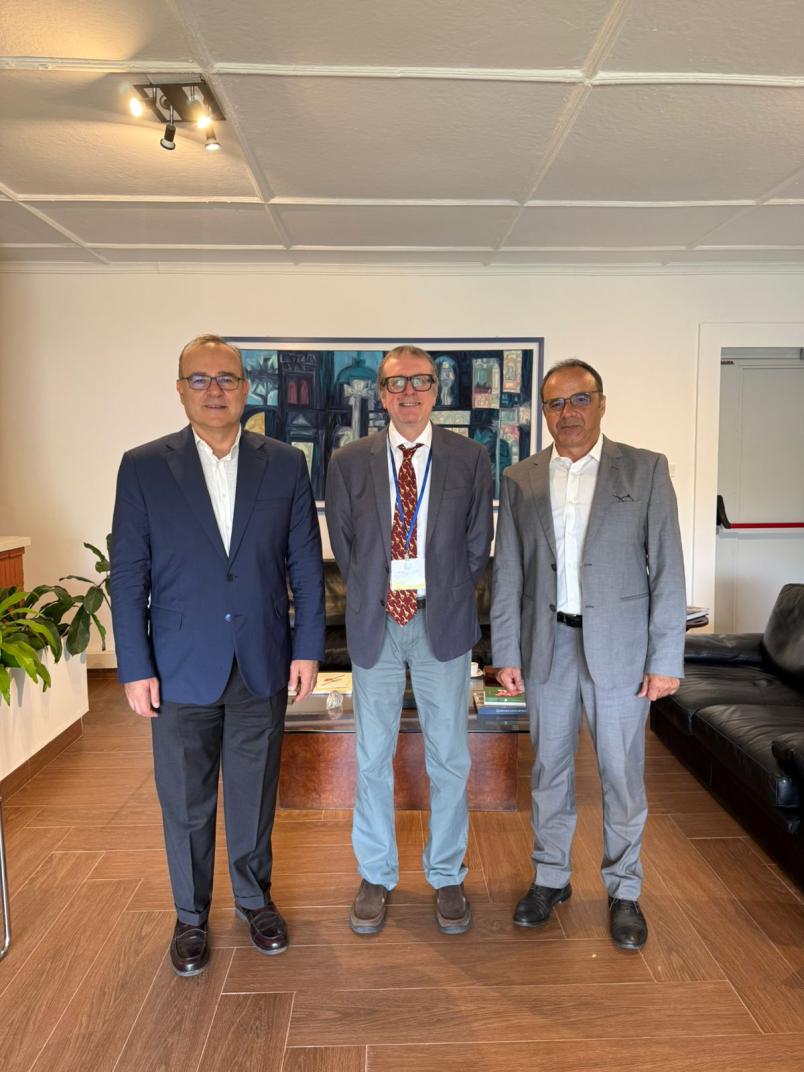
The initiative consolidates the collaboration between Politecnico, AICAD (African Institute for Capacity Development) and JKUAT, strengthening a partnership that combines academic expertise, applied research capabilities and local roots. The course draws on a high-profile, multidisciplinary scientific team composed of academics and experts from Politecnico, AICAD and JKUAT, as well as from Alma Mater Studiorum – University of Bologna, University of Florence, University of Sassari, Luiss Guido Carli University and the RE-CORD research centre (Renewable Energy Consortium for Research and Demonstration).
The Advanced Skills Course represents a significant step forward in the co-production of knowledge between Europe and Africa. It is not just a matter of transferring skills, but of jointly building technological pathways and development models capable of combining innovation, social equity and environmental sustainability. The initiative also contributes to strengthening the dialogue between Italy, the European Union and East Africa, in line with the objectives of the Mattei Plan and with a vision of partnership based on shared growth and sustainable development.
“The training activities within the programmes funded by the Ministry of University and Research in the African region are strategic for Politecnico, as they enable us to establish collaborations that, through the development of specialised technical skills, also create bridges with and for the industrial sector,” comments Rector Stefano Corgnati. “Africa, both Mediterranean and Sub-Saharan, represents one of the University’s strategic priorities, also with reference to the various initiatives under the Mattei Plan for Africa, in which we are actively involved.”
“The Advanced Skills Course beginning today in Nairobi represents both the culmination of a journey initiated by Politecnico in the region several years ago and the starting point for further actions, in the fields of both higher education and collaborative research,” adds Professor Chiaramonti. “Sustainable development, together with the production and utilisation of bioproducts, biomaterials, bioenergy and biofuels, and the effective integration of agriculture capable of providing food, feed and fuels, constitutes a cornerstone of the defossilisation pathway. In this context, the establishment of strong partnerships with academic institutions and local stakeholders is an essential and necessary element for achieving this strategic objective and for supporting institutions in the policy-making process.”