

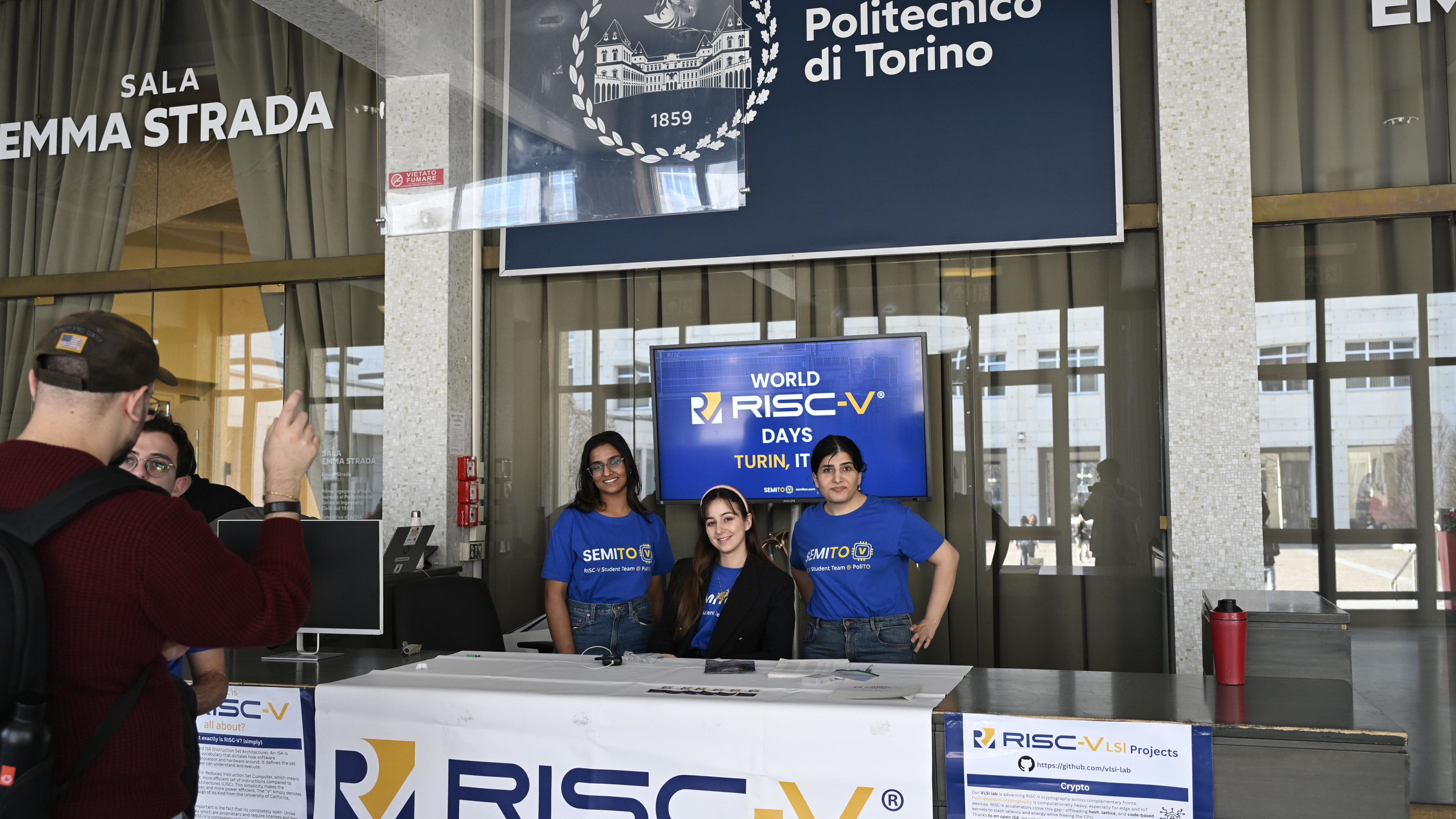
With SemiTO-V, open source processors within reach of every business
SemiTO-V is the first student team in Europe, and one of the first in the world, to use the open standard RISC-V ISA to create custom processors, firmware and software. The university team has two goals: raising awareness among people and businesses about the potential of RISC-V, and developing projects related to this standard. Following its formal establishment in October 2025, SemiTO-V is now ready to collaborate with businesses through informational meetings, practical tools and, in the longer term, the training of well-prepared young graduates on the subject.
"We are committed to spreading awareness of the open RISC-V architecture and helping people understand its full potential," explains Emanuele De Paoli, the group's team leader, who adds: "SemiTO-V envisions a future in which computing is truly accessible to everyone: a future in which both software and hardware are completely open." The team is working to solve the main challenge facing RISC-V hardware: the lack of good firmware and software compatibility. Its activities, beyond raising awareness about RISC-V, include research into processor design, performance optimisation, improved energy efficiency, and software development for existing RISC-V chips.
SemiTO-V is made up of around 40 students, organised into divisions: hardware, CPU, software development, and a management section. Claudio Passerone, lecturer at the Department of Electronics and Telecommunications-DET and the team's academic supervisor, adds: "SemiTO-V offers educational and training opportunities to students, who learn to work together in an interdisciplinary environment, drawing on different areas of knowledge that complement each other." SemiTO-V is currently working on building a 32-bit RISC-V core. The team has already developed a Framework laptop expansion board based on the RP2350 and has built a software library to support it.
SemiTO-V's activities represent a concrete opportunity for businesses. The RISC-V standard, based on an open and shared language, makes it possible to reduce development costs and design tailored solutions for specific production needs.
Applications cut across virtually all industrial sectors. Businesses can also benefit from access to young people already trained in these computing tools, and the team regularly organises briefings on the potential of RISC-V in terms of flexibility and cost-effectiveness.