

The challenge of sustainable research in the Arctic: Politecnico di Torino coordinates the European SUSTAIN-ARCTIC project

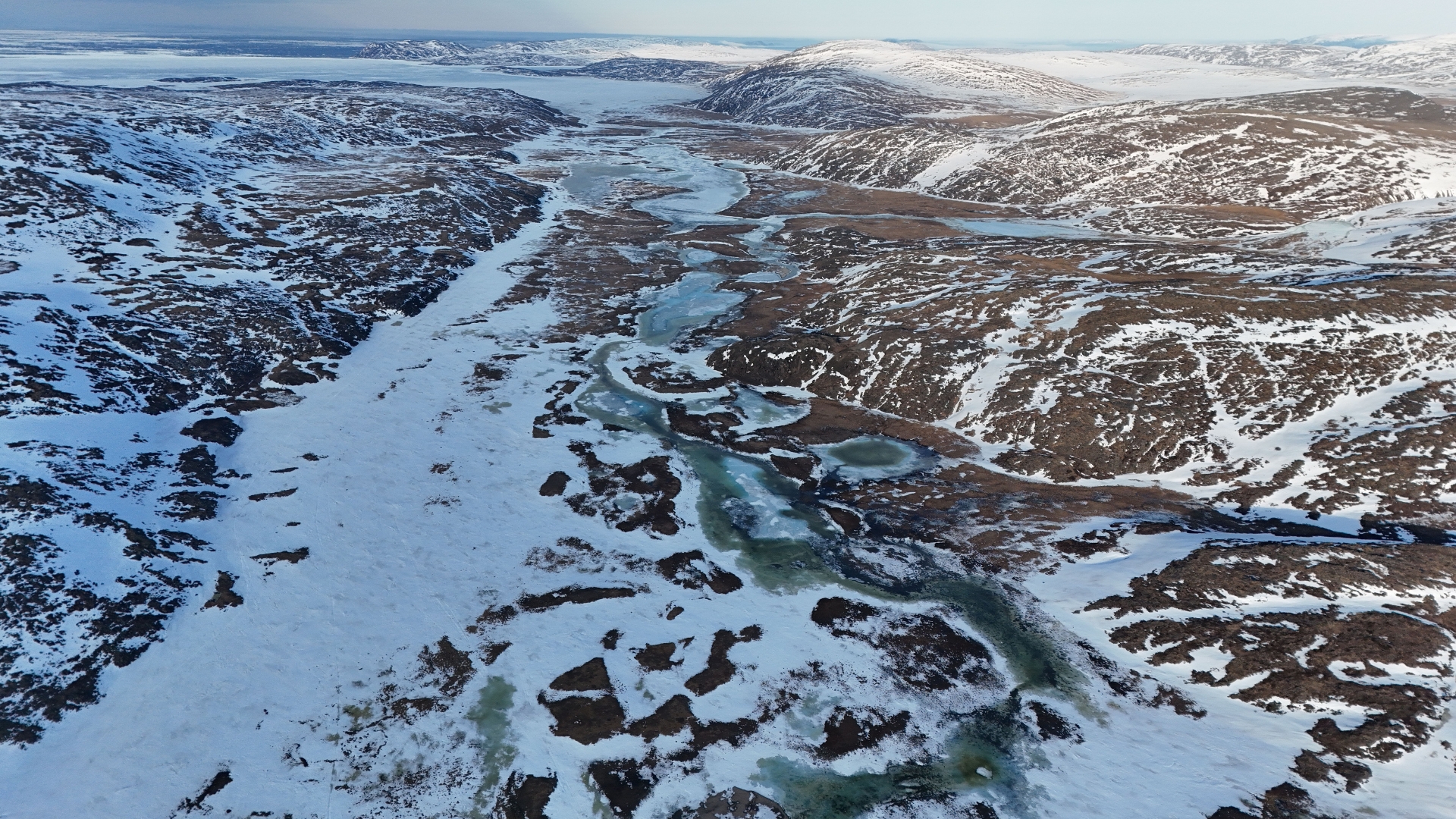
The Arctic is where the effects of climate change are affecting the planet most rapidly and intensely. Understanding what is happening in this region is vital for predicting the global impacts of the climate crisis. It also helps to inform political, environmental and economic decisions based on reliable scientific data. Yet there is a challenge within the challenge: how can we carry out research in extremely fragile ecosystems without causing further deterioration?
To answer this question, the EU awarded 5.6 million euros to the project SUSTAIN-ARCTIC – Advancing Climate-Neutral Research in the Arctic and Sub-Arctic Regions. Politecnico di Torino will coordinate the project for the next three years, leading an international consortium of 11 institutions from six countries: Italy, Norway, Denmark, Finland, Poland and France.
The aim is ambitious: to develop, test, and promote climate-neutral solutions for research activities in the Arctic and sub-Arctic regions, significantly reducing the environmental impact of scientific infrastructure.
The SUSTAIN-ARCTIC approach is based on three main pillars: sustainable logistics, optimisation of scientific field operations and digitalisation of research activities. Today, many research bases in the Arctic rely on the transport of large quantities of fuel to power diesel generators, resulting in high environmental and logistical costs. The European project aims to move beyond this model through an integrated approach that combines local renewable energy production, advanced storage systems, smart resource management and digital tools to reduce the need for travel and field stays.
SUSTAIN-ARCTIC will focus on two demonstration sites, one in the Svalbard archipelago in Norway and one in Finland, where energy systems based on local renewable sources – solar and wind power – will be developed to ensure a year-round energy supply for the research stations. The new infrastructure will also be designed to maximise the reuse of waste and wastewater, and to enable an increasing number of remote operations thanks to advanced digital connections.
“The Arctic environment, as shown by recent news reports, is the focus of international interest, primarily for geopolitical reasons and the potential presence of resources (energy, materials), along with the intensified effects that climate change is unfortunately causing at those latitudes (as is also the case in high-altitude regions such as the Alps)” – comments Massimo Santarelli, Professor at Department of Energy-DENERG and project leader – Our research activities position Politecnico di Torino at the heart of a pioneering initiative in sustainability and decarbonisation within Arctic scientific research facilities. I believe this is just the first step, albeit a small one in a significantly broader research context. Accordingly, as mandated by the Rector, I will join a second ministerial mission to Nuuk (Greenland), following the one in 2025, to forge even more research agreements in that region, in collaboration with the Danish government. We are also planning to organise a conference on Arctic issues, scheduled for mid-October 2026, to address various research topics relating to the Arctic. They may be relevant to the wider research community at Politecnico, ranging from fundamentals in physics and chemistry to research into ecosystems, the built environment and local communities, including the cultural and traditional preservation issues, right through to the adoption of information technologies (telecommunications, management, AI) that are particularly useful in remote areas with harsh climates. I believe that, as a technical and scientific university, we have many opportunities to offer advanced technological contributions to the long and distinguished tradition of Arctic studies in which Italy has been, and still is, very active”.
Politecnico di Torino's leading role in a strategic project for the future of polar research stems from the experience gained in coordinating major European programmes and, in particular, from the REMOTE project – Remote Area Energy Supply with Multiple Options for Integrated Hydrogen-Based Technologies. Run between 2018 and 2022, REMOTE led to the development of an innovative hybrid hydrogen-based energy system in Rye Fjord, in the Norwegian Sea, demonstrating how renewable energy can ensure energy self-sufficiency even in remote locations with extreme environmental conditions.
Among the Italian partners of SUSTAIN-ARCTIC is the Institute of Polar Sciences (ISP) of the National Research Council, the national centre of excellence for research in the polar regions, which will provide multidisciplinary expertise and advanced technologies for the study and protection of Arctic ecosystems.
The project also fits into a social and geopolitical framework of growing significance. The Arctic is currently undergoing profound environmental, economic and strategic changes that call for responsible and inclusive approaches. The activities planned under SUSTAIN-ARCTIC will be developed in collaboration with local communities and indigenous peoples, with the aim of promoting sustainable, collaborative and replicable research models.
One of the first expected outcomes will be the drafting of a proposal to be presented at the Arctic Circle Assembly 2026, the leading international forum dedicated to the future of the Arctic regions, which takes place annually in Reykjavík and brings together governments, scientific institutions, international organisations and representatives of local communities.
With SUSTAIN-ARCTIC, Politecnico di Torino is strengthening its role in European research on the energy and climate transition, helping to combine scientific progress with the protection of the most vulnerable ecosystems.