

Politecnico di Torino and Vent: a permeable ceramic membrane as a molecular sieve

A membrane capable of acting selectively on gases, affordable to produce, and highly adaptable. This is what Politecnico has developed together with VENT, a company specializing in nanotechnologies and electronic and electromechanical devices. The prototype is currently in the testing phase, but its fields of application are already clear.
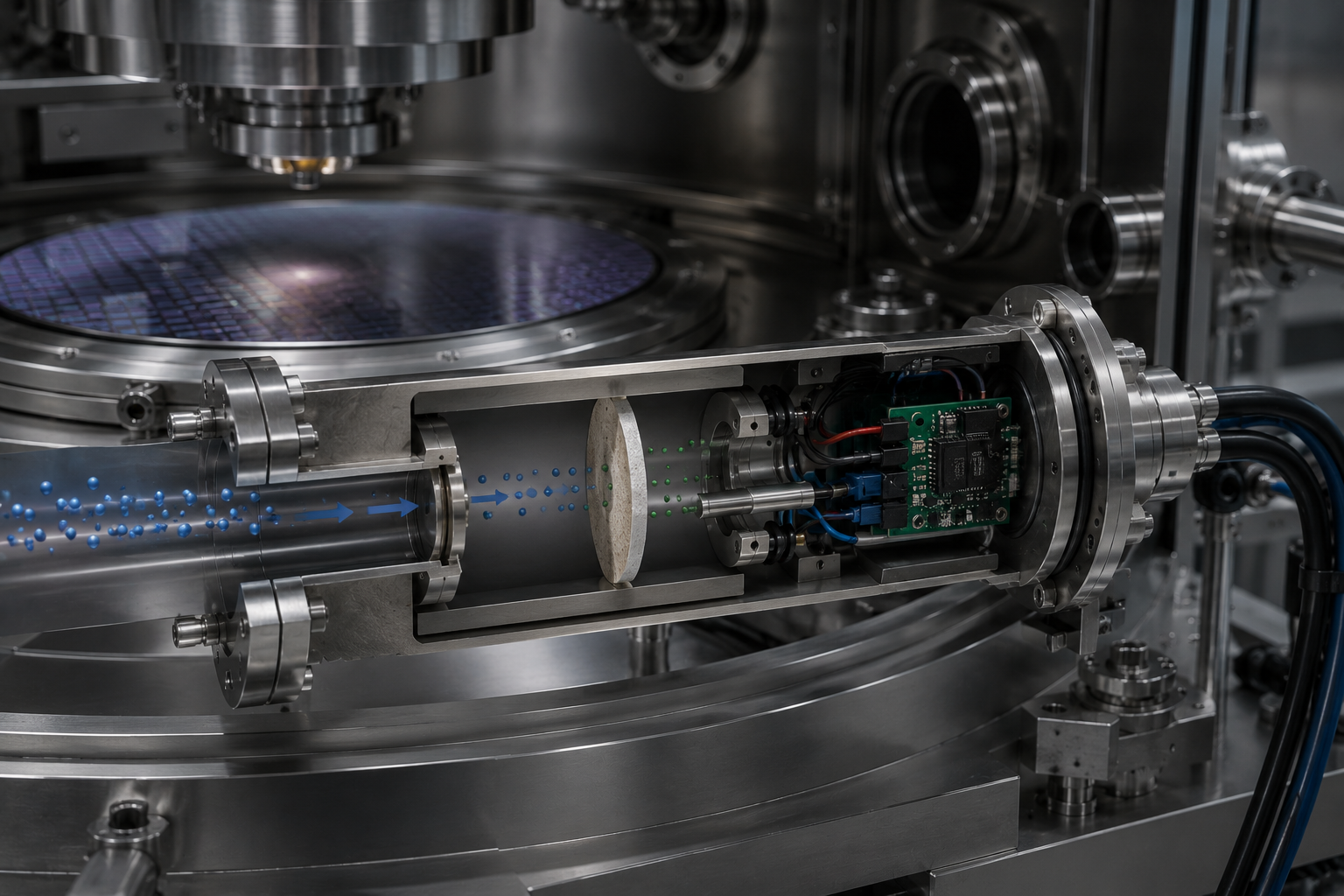
"The membrane we have developed can work like a valve: it either allows or blocks the passage of specific gases such as hydrogen and helium. The valve is selective and can be switched on or off electrically," explains Valentina Bertana, researcher at the Department of Applied Science and Technology-DISAT. The device was initially designed for vacuum technology applications but can also be used in systems operating with gases at different pressures — technologies employed across numerous sectors, from microelectronics and aerospace to chemistry and environmental applications, food and beverage production and packaging, and the pharmaceutical industry.
The innovation touches on two fundamental aspects: the manufacturing process and performance. The manufacturing process is more cost-effective, while performance offers greater flexibility thanks to speed, simplicity, and ease of adaptation. The membrane is made from ceramic materials, chosen for their chemical inertness, good thermal properties, durability, and ease of integration into more complex systems.
The collaboration with VENT was also key: Politecnico handled the technological and construction phases, working in synergy with the company, which oversaw and coordinated the design activities, drawing on its application-specific expertise. The patented prototype is now being tested at the company, which will then move into production, expected to begin in around a year. Andrea Piscitelli, head of research at VENT, explains: "We have been working with the university for some time, and together with the DISAT research group we quickly identified the aspects to optimize and the path to implementation".
Piscitelli outlines the most interesting aspects from a business perspective: ease of use and cost-effectiveness, adaptability in gas leak detection, and the significant advantage of selectivity towards certain low molecular weight gases and not others. "What was fundamental for us," highlights Piscitelli, "was gaining access to cutting-edge technologies that allowed us to develop the device, whose cost, once the production process is fully engineered, should be in line with the market".