

Politecnico di Torino: a new frontier in hospital sensor technology
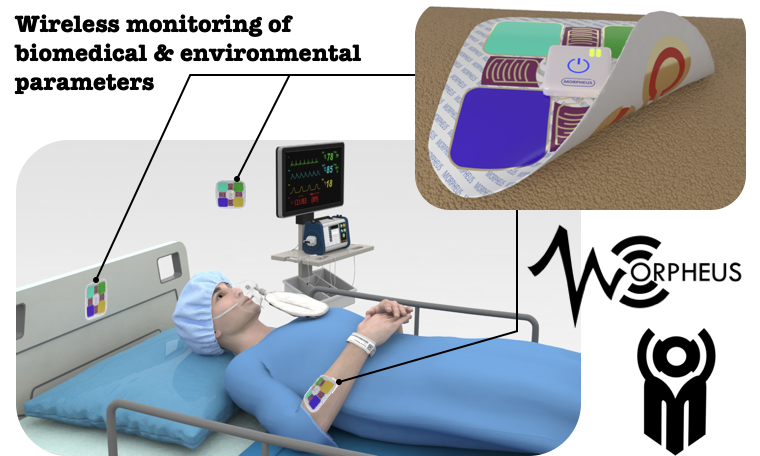
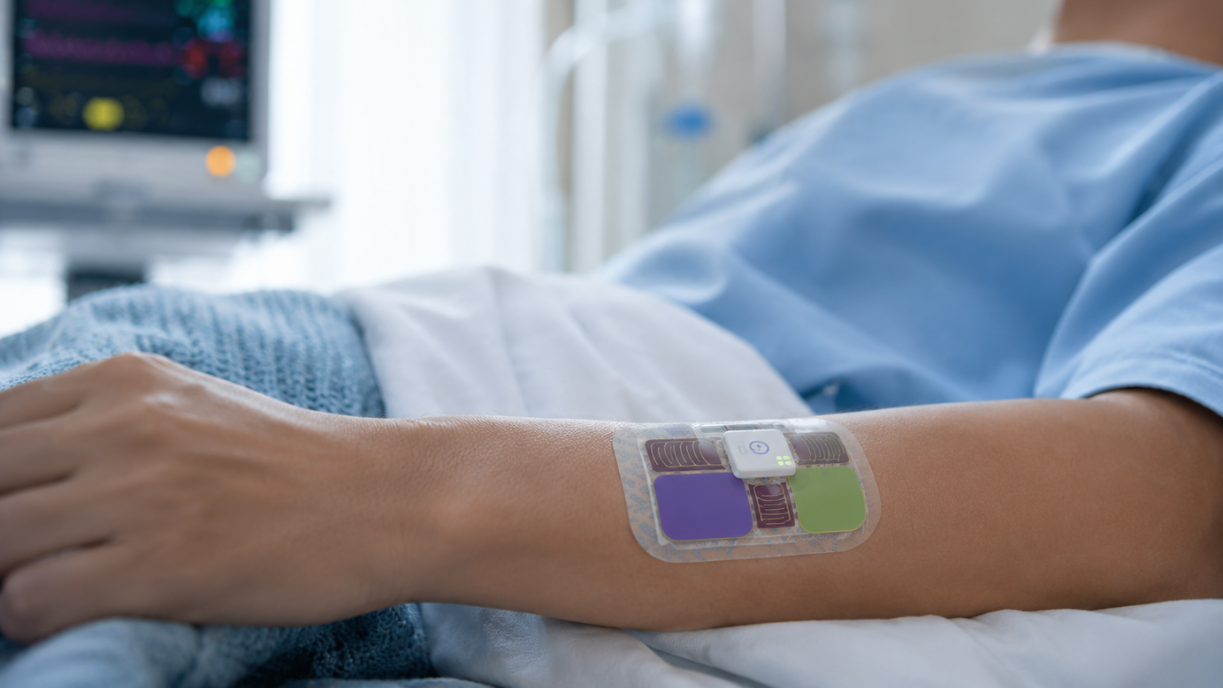
Two-dimensional materials, flexible electronics and advanced sensor technology come together in MORPHEUS – MOdular Reconfigurable Platform for Health and Environmental Universal Sensing, the European project that aims to revolutionise health monitoring through smart wearable devices. Politecnico di Torino will lead the international consortium, which involves 14 partners including universities, research bodies and companies. Teresa Gatti, professor at Politecnico’s Department of Applied Science and Technology (DISAT), will coordinate the project aimed at developing a modular and reconfigurable platform, designed to continuously and non-invasively monitoring key physiological and biochemical parameters, such as blood pressure, temperature, glucose and cortisol, in hospitalised patients.
MORPHEUS was developed in response to the European call Innovative Advanced Materials (IAMs) for conformable, flexible or stretchable electronics and as part of the European partnership Innovative Advanced Materials for Europe (IAM4EU). The call sought the development of innovative advanced materials, including two-dimensional materials (2D Materials – 2DM), with improved properties in terms of flexibility, adaptability and elasticity, enabling new applications in the field of flexible electronics, namely foldable and conformable electronic devices designed to adapt to non-rigid surfaces, such as the human body.
Two-dimensional materials are, compared to traditional materials, extremely thin and extend across two dimensions (length and width), thereby exhibiting unique properties such as high mechanical strength and high thermal and electrical conductivity, which make them particularly versatile. These materials were at the heart of the JANUS BI (All-liquid phase JANUS BIdimensional materials for functional nano-architectures and assemblies project, coordinated by Professor Gatti herself. The project is supported by a starting grant from the European Research Council (ERC) and by the associated Proof of Concept project HYSENS - HYbrid hydrogels based on 2D materials and conducting polymers for piezoresistive SENSing, which has already led to the development of advanced sensor technology for this type of application.
MORPHEUS has partnered with the innovative start-up Dropper, which specialises in IoT devices and wearable electronics and is incubated at I3P, the Innovative Business Incubator of Politecnico di Torino. Additionally, the research group will benefit from the expertise and technological consultancy of STMicroelectronics, a leading company in the semiconductor electronics sector, which has been collaborating with Politecnico for years through a strategic partnership agreement and joint laboratories hosted at its Cittadella campus.
While clinical application in a hospital setting still requires further development, MORPHEUS will also focus on the biocompatibility of the materials involved. This effort is supported by a partner specializing in pre-certification for non-cytotoxicity regarding skin contact for the developed objects.
The inclusion of a Greek hospital in the consortium will enable research to be tailored to the actual needs of end-users and will allow a roadmap to be drawn up for the future standardisation of this new generation of wearable devices.
The vision set out by MORPHEUS is to develop high-performance wearable devices for continuous patient monitoring, enabling future improvements in well-being and care quality, while ensuringconstant and highly accurate monitoring of key vital signs. This development could promote the spread of personalised medicine and, at the same time, help make hospital services more efficient and sustainable, reducing hospital costs and improving the services provided.
“MORPHEUS was launched with the ambition of transforming the way we monitor patients’ health, enabling continuous, accurate and non-invasive detection of physiological parameters. The integration of innovative materials and flexible electronics opens up new possibilities for increasingly personalised and efficient medicine. The strength of this project lies in the highly interdisciplinary and international nature of the consortium, which allows us to tackle complex challenges in an integrated manner, from advanced materials to clinical validation. This approach is essential for translating scientific results into technologies that can actually be transferred to the healthcare system,” says Professor Teresa Gatti.
The consortium responsible for implementing the MORPHEUS project comprises, alongside Politecnico di Torino: Technische Universität Chemnitz (Germany), DROPPER SRL (Italy), Nova ID FCT – Associação para a Inovação e Desenvolvimento da FCT (Portugal), Technische Universität Dresden (Germany), Bursa Technical University (Turkey), the Romanian Standards Association (Romania), the University of Granada (Spain), INNOVA SRL (Italy), Shades of Blue SRL (Italy, affiliated body), the Free University of Bozen-Bolzano (Italy), Aristotle University of Thessaloniki (Greece), NGRAFI NANO TEKNOLOJI ANONIM SIRKETI (Turkey) and University of Padua (Italy).