

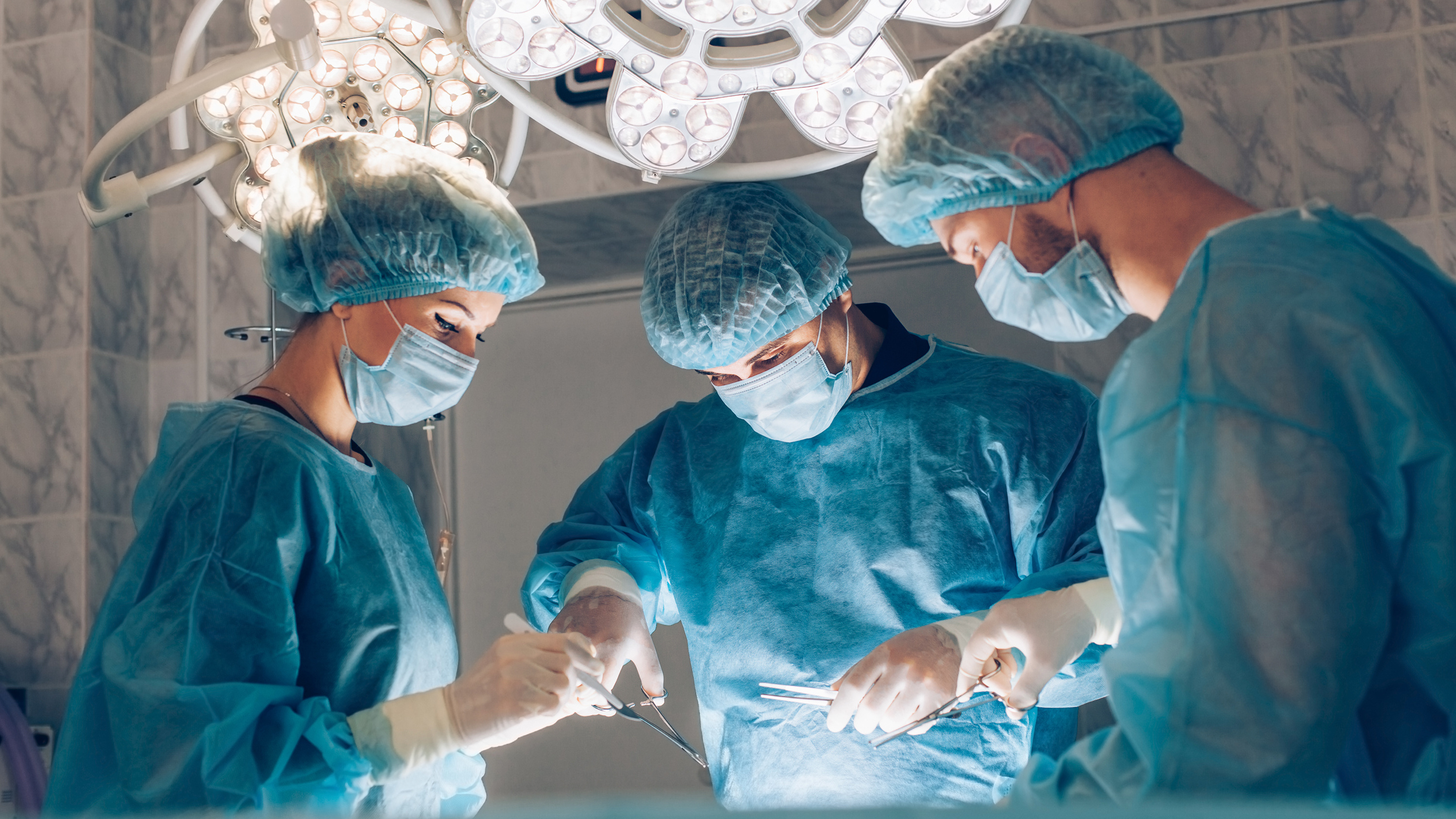
A new device for suturing abdominal tissue without stitches

Biomedical research at the Department of Structural, Geotechnical and Building Engineering-DISEG has produced a device that can suture the abdominal wall after delicate surgical procedures, more effectively and safely than traditional techniques. The work has led to a patent that, currently under development, could represent a significant step forward in abdominal wall surgery.
The patented device, called Tissue SUrgical REpair (T-SURE), was developed to address key clinical and surgical needs linked to the growing prevalence of abdominal wall conditions. These procedures are particularly demanding, especially for the patient's recovery, and are also complex and costly for the healthcare system. Among the most common problems the device could help prevent are tissue weakening and post-operative hernias, caused by imperfections or failures in traditional sutures.
"This device grew out of a collaboration between DISEG and Paolo De Paolis, a leading specialist in abdominal surgery who contacted us after seeing another one of our patents," explains Cecilia Surace, lecturer at DISEG and co-inventor of T-SURE alongside Vito Burgio, then a doctoral student and now an adjunct lecturer, and Mariana Rodriguez Reinoso and Valentina Tuveri, both previously active at DISEG as a doctoral student and research fellow, respectively.
"It all began with surgical experience in treating abdominal wall conditions that require difficult procedures, which can often mean significant additional costs, difficulties, and commitments for patients – adds Paolo De Paolis – The aim is precisely to update suturing techniques, making them more efficient and preventing post-operative complications".
T-SURE is a system that has two components: a series of helical elements that bring the muscle edges together, inserted perpendicular to the tissue to be rejoined, and fastening elements that hold them in place during healing to support tissue repair. Early experimental evidence shows that the system effectively draws tissues together, supporting optimal healing in less time and functional results potentially superior to traditional suture-based techniques.
T-SURE distributes tension across the tissue more evenly, reducing the risk of tearing the muscle edges and avoiding the ischaemia caused by the compression of traditional sutures. This is a significant advantage, as current suture treatments have failure rates between 20 and 40%. As De Paolis notes: "A system like Tissue SUrgical REpair would greatly improve outcomes across the patient population at an epidemiological level, especially considering that this device could initially be used to repair walls that have already been damaged: roughly 100,000 such procedures are carried out every year in Italy alone. But Tissue SUrgical REpair could later be used for all sutures performed after an initial surgical procedure, improving outcomes from the start".
The process that led to the development of the device began in 2023, thanks to "Proof of Concept" funding from Fondazione Compagnia di San Paolo, which made it possible to build a first prototype. The research group subsequently optimised the system's geometry, finding the most suitable material for its construction, which must be biocompatible and, in the future, biodegradable as well. In parallel, the applicator needed to insert the helical elements into the abdominal wall was also developed.
The research continues today, with the contribution of Vittoria Cuneo, a doctoral student at DISEG, and numerous students completing their master's dissertations in Biomedical Engineering. The goal is to increase the technological maturity of Tissue SUrgical REpair, so that, after the necessary checks, it can be used in clinical practice.
"We need companies to support us in the steps still needed to obtain the certifications required to use the device, as well as to fully reach its potential – explain Surace and De Paolis – We are, in fact, considering creating a smart device that, in addition to the mechanical features described, would also be able to monitor what happens during the suturing period, and therefore track the patient's healing".
T-SURE is still under active development and promises very interesting results. The DISEG team expects to complete it within five years, though new partners can join at any stage.