A new generation of photovoltaic power for indoor spaces
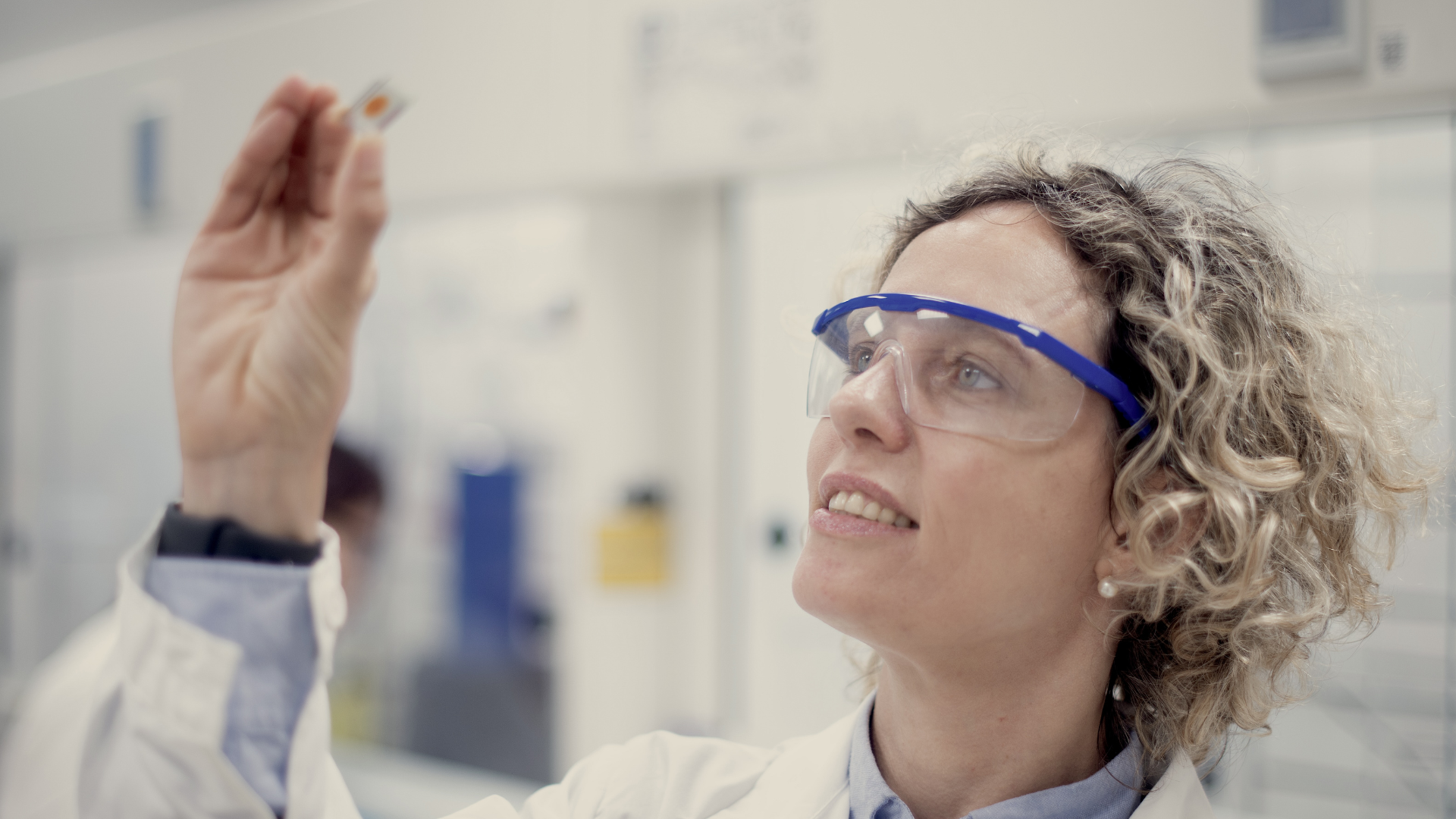
“With VIPER, we aim to transform cutting-edge research findings into tangible technology for the energy of the future”. This is the ambition driving VIPER (HeaVy pnIctogens based indoor Photovoltaics with up-cyclEd caRbon electrodes), the project coordinated by Professor Teresa Gatti of the Department of Applied Science and Technology (DISAT), which has recently been awarded an ERC Proof of Concept grant from the European Research Council, amounting to 150,000 euros. This funding will allow the research team to transform a proven laboratory-scale technology into ready-to-use prototypes for future industrial applications, testing their technical and commercial viability and paving the way for technology transfer.
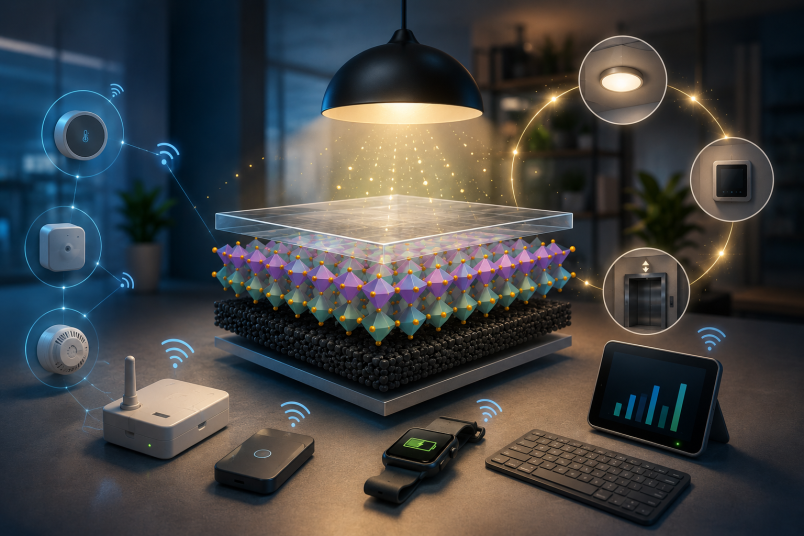
The project focuses on a new generation of photovoltaic cells that are designed to capture artificial light present indoors, rather than sunlight. It is a virtuous energy cycle: the light that illuminates buildings, offices, schools, and hospitals becomes, in itself, a source capable of powering sensors, electronic devices, and Internet of Things applications, while at the same time reducing dependence on traditional batteries.
This technology addresses an increasingly pressing challenge: ensuring a continuous power supply to the millions of sensors and devices that are making buildings ever smarter. Today, these systems rely almost exclusively on batteries, which need to be replaced periodically and entail both financial and environmental costs. VIPER aims to overcome this limitation by developing an autonomous, sustainable and low-maintenance energy source, exploiting the existing lighting in our homes and workplaces.
How does a photovoltaic panel designed for indoor use actually work? Unlike roof-mounted modules, which are optimised for solar radiation, indoor photovoltaic systems must convert the light emitted by LED lamps and other artificial light sources – which are much less intense and have a different light spectrum to sunlight – into energy.
“For this reason, we need specially designed materials that can operate in low-light conditions and ensure high performance even inside buildings,” explains Professor Gatti.
To achieve this, bismuth and antimony, lead-free materials containing no noble metals, combine high stability, low toxicity and excellent performance even in low-light conditions. They represent a more sustainable alternative to traditional photovoltaic cell materials, which often rely on more expensive, critical or environmentally damaging elements, such as gold and certain organic compounds currently used in new-generation photovoltaic cells.
However, innovation does not stop at semiconductor materials: “Another distinctive feature of the project is its approach to the circular economy,” comments Gatti, “The electrodes will, indeed, use waste materials – such as end-of-life tyres and residual biomass – transforming them into high value-added components for photovoltaic devices.”
Like all ERC Proof of Concept projects, VIPER also stems from the evolution of a previous project funded by the European Research Council. In the case of VIPER, the starting point is JANUS BI, the ERC Starting Grant that enabled the research group to study nanostructured materials inspired by natural photosynthetic processes, developing new strategies to control light conversion and charge transfer. The knowledge gained forms the scientific basis of VIPER, which translates these findings into photovoltaic technology for indoor environments.
Thanks to the ERC Proof of Concept grant, the research team will now work on developing and validating prototypes operating in real-world conditions, thereby facilitating technology transfer towards applications in the fields of smart buildings, environmental monitoring and low-power electronics.
Collaboration with the Centre for Hybrid and Organic Solar Energy (CHOSE) at the Tor Vergata University of Rome will also be crucial in this process: “The collaboration with Professor Antonio Agresti’s group represents essential added value in validating the technology on a more advanced scale and encouraging its progress towards future industrial applications. We aim to contribute to a more efficient, secure and environmentally friendly IoT ecosystem”, concludes Professor Teresa Gatti.