Addis Ababa: Italian-Ethiopian cooperation for the future of the Guenete Leul Palace and the Ethnographic Museum

On Thursday, 8 October, Politecnico and the University of Turin organized a seminar named “The Italo-Ethiopian Cooperation for the Restoration of the Guenete Leul Palace and the Renovation of the IES Ethnographic Museum” at the Institute of Ethiopian Studies (IES) of the University of Addis Ababa and under the auspices of the Italian Embassy. The event was part of the seminar series promoted by the Society of Friends of the Institute of Ethiopian Studies (SOFIES).
The meeting introduced the Addis Ababa community, for the first time, to the project for the restoration and enhancement of the Guenete Leul Palace and the renovation of the IES Ethnographic Museum housed therein. It marked the transition from the design phase to the implementation phase, with the launch of the tender process for the first phase of the restoration works.
The Guenete Leul Palace is of great historical and symbolic importance for Italian-Ethiopian relations, having served as the residence of Emperor Haile Selassie, the seat of the government of East Africa during the Italian occupation of 1936–41, and the first building of Addis Ababa University upon its foundation in 1961.
Italian Cooperation is funding both the restoration project for the Palace, carried out by Politecnico di Torino, and the range of museum development activities under the SAIMP project – Strengthening African-Italian Museum Partnership – carried out by the University of Turin in collaboration with its partners (the University of Milan, the Museum of Civilisation in Rome and the ‘La Venaria Reale’ Conservation and Restoration Centre).
The two projects provide an integrated approach to the issues of conservation and restoration, structural and services upgrades, accessibility and safety, and museum and curatorial development, as well as the relationship between the Palace, the university campus and the city.
The seminar began with speeches by Luca Carpintieri, Chargé d’affaires at the Embassy; Michele Morana, Director of AICS Addis Ababa; Semen Kumurzhi, Director of the Italian Cultural Institute; and Samuel Kifle, President of Addis Ababa University. Cecilia Pennacini from the University of Turin and Takele Merid, Head of the Centre for Museum Studies, outlined the prospects for the new Ethnographic Museum. Michele Bonino, Francesca De Filippi, Elena Rudiero and Rahel Lemma from Politecnico's Department of Architecture and Design (DAD), together with Silvia Sabato and Amalia Nani from the ‘La Venaria Reale’ Conservation and Restoration Centre and their Ethiopian partners at MH Engineering, presented the project for the restoration and enhancement of the Guenete Leul Palace.
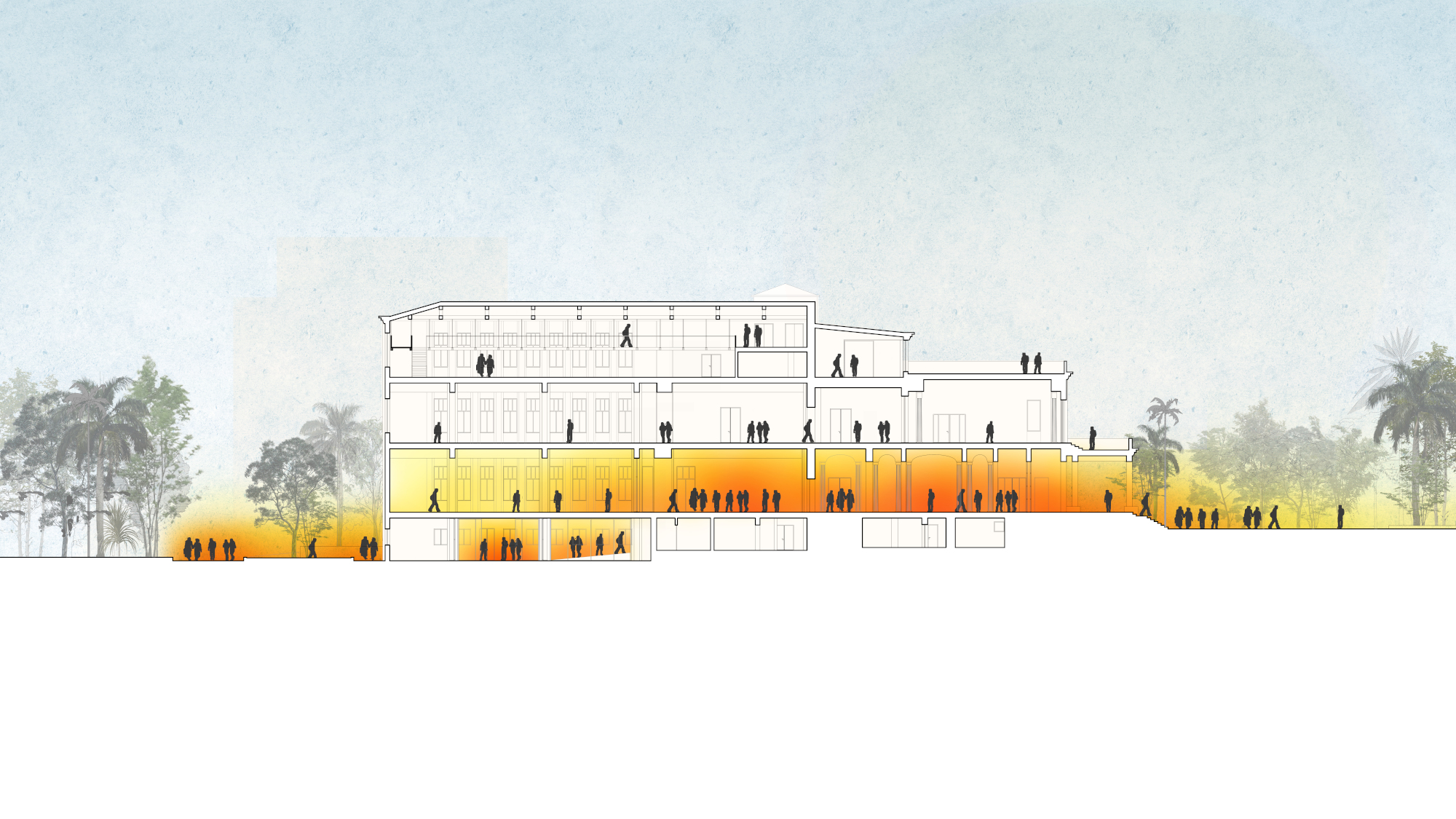
The restoration project highlights the building’s historical significance, preserving its character whilst incorporating several contemporary elements designed to modernise its role as a museum and better connect the building with the surrounding areas. This includes a new east-west passageway, a staircase leading from the basement to the roof, a storage area open to visitors, a mezzanine suspended from the new roof, and a viewing tower offering views of the city and the mountains (the building is situated at an altitude of over 2,500 metres).
The day also marks the conclusion of the university module “Museum practices and exhibition design”, organised as part of the Erasmus+ programme between the University of Turin and the University of Addis Ababa and linked to the SAIMP project. The module involved students and lecturers in a course dedicated to museum practices and exhibition design, strengthening the dialogue between Italian and Ethiopian academic and cultural institutions.
The round-table discussion gathered representatives from Addis Ababa University, the Ethiopian Heritage Authority, the European Union Delegation, Politecnico and the University of Turin, highlighting the role of international cooperation in heritage conservation and museum development.
The restoration project for the Guenete Leul Palace, together with the training and research programme developed within the framework of SAIMP, confirms the value of the collaboration between Italy and Ethiopia and promotes a shared reflection on the role of museums as places of research, education, conservation and intercultural dialogue.


- Immagine
 NomeGuenete Leul Palace
- Immagine
 NomeSection of the Palace
- Immagine
 NomeAerial view of the Palace
- Immagine
 NomePalace interiors
- Immagine
 NomePalace exteriors
- Immagine
 NomeRestoration work to highlight the building’s historical significance
- Immagine
 NomeHistorical photograph of the Palace